Complete Guide to Furnace Maintenance in Greeley, Colorado: What Actually Happens During a Professional Tune-Up
You’re probably reading this because your furnace is older, your heating bills seem higher than last year, or you’ve heard conflicting advice about whether annual maintenance is really necessary. Here’s what actually happens when a master plumber services your furnace in Northern Colorado—and why our unique conditions make this decision different than it would be in Denver or Fort Collins.
Why Greeley’s Environment Demands Specialized Furnace Care
The Altitude Factor Most Technicians Miss
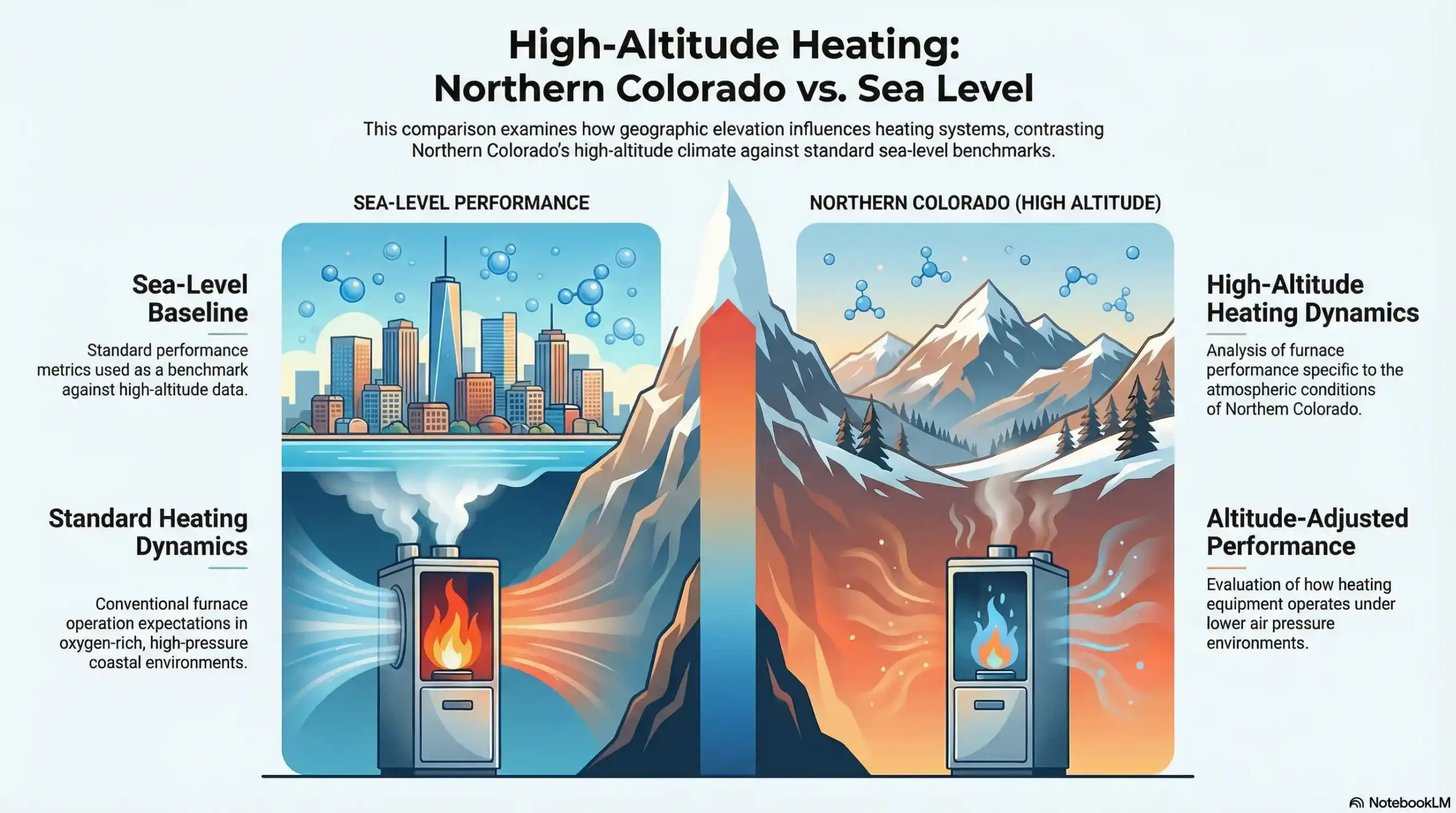
At 4,658 feet above sea level, your furnace operates in conditions most equipment wasn’t originally calibrated for. Thinner air contains less oxygen, which affects how completely your system burns natural gas or propane. When combustion isn’t optimized for our altitude, two problems develop:
- Incomplete fuel burn creates carbon monoxide instead of harmless carbon dioxide
- Efficiency drops because unburned fuel gets wasted up the flue
Most HVAC technicians from metro Denver or sea-level areas don’t adjust combustion settings for Greeley’s elevation. This oversight explains why some systems develop carbon monoxide issues or use more gas than expected. Carrier, Trane, and Lennox systems require different altitude adjustments at 4,658 feet—adjustments most Denver-based technicians haven’t been trained to perform.
Temperature Swings That Break Heat Exchangers
Northern Colorado’s 40-60 degree daily temperature swings create thermal stress most furnace manufacturers don’t account for in their design specifications. Your heat exchanger—the component that costs $2,000-4,000 to replace—expands and contracts dozens of times each day during shoulder seasons.
The Local Reality:
- Metro Denver heat exchangers: 18-20 year average lifespan
- Greeley/Northern Colorado: 12-15 years without proper maintenance
- With annual calibration: 16-18 years typical
This isn’t just about comfort. Heat exchanger cracks allow combustion gases to mix with your home’s air supply, creating immediate safety hazards.
Wind Patterns That Affect Venting
Chinook winds and constant High Plains breezes create venting challenges unique to our region. When wind hits your roof at certain angles, it can reverse the flow in your furnace flue—a condition called backdrafting. Instead of carrying combustion gases safely outside, your system pulls those gases back into your home.
Northern Colorado’s combination of altitude and wind patterns creates backdrafting conditions that contributed to 23% of carbon monoxide incidents in Weld County emergency reports. Many Greeley homes have venting systems designed before builders understood local wind patterns. According to City of Greeley building department records, homes built in the Centennial Village area (1970s-1980s) show 40% higher rates of foundation-related HVAC issues.
Hard Water and Humidity Effects
Our mineral-heavy water affects furnace humidification systems, while extremely dry winter air (often below 20% relative humidity) causes rubber seals and gaskets to crack prematurely. These seemingly minor issues compound into major problems:
- Cracked seals allow small gas leaks that worsen over time
- Clogged humidifier systems force your furnace to work harder
- Mineral deposits in condensate drains can back up into the system
What Emergency Repairs Actually Cost in Northern Colorado
Understanding the financial reality helps clarify why prevention makes sense—or doesn’t—for your specific situation.
Peak Season Pricing Reality
January emergency calls in Northern Colorado:
- Basic control board replacement: $450-650
- Heat exchanger diagnosis: $200-350 (just to determine if it’s cracked)
- Blower motor replacement: $600-900
- Complete system replacement: $8,000-15,000
Same work during September-October:
- Basic control board replacement: $280-400
- Heat exchanger diagnosis: $150-200
- Blower motor replacement: $400-600
- Complete system replacement: $6,800-13,000
When Greeley’s first freeze warning is issued (typically mid-to-late October), service demand increases 300% within 48 hours.
Parts Availability During Cold Snaps
When temperatures stay below freezing for extended periods, parts that normally ship overnight to Northern Colorado often face 3-5 day delays. Popular components—particularly for systems 10+ years old—become scarce when every contractor in the region needs the same parts.
Real example from last winter: A customer’s 12-year-old Carrier furnace needed a specific pressure switch during the January cold snap. That $85 part took six days to arrive, leaving the family without primary heat while using space heaters at an extra cost of $40+ per day in electricity.
Insurance Coverage Complications
Most homeowner’s policies require proof of annual professional maintenance for full coverage of heating-related claims. If carbon monoxide damages personal property or requires temporary housing, insurers scrutinize maintenance records carefully.
Specific exclusions we’ve seen:
- Claims denied for systems over 10 years old without service records
- Carbon monoxide incidents not covered if annual maintenance wasn’t documented
- Water damage from frozen pipes during furnace failures reduced to 50% coverage
Energy Cost Reality with Xcel Energy Rates
Using current Xcel Energy rates for Northern Colorado residential customers, a furnace operating at 70% efficiency instead of 85% costs approximately:
- 2,000 sq ft home: $400-600 extra per heating season
- 2,500 sq ft home: $550-750 extra per heating season
- 3,000+ sq ft home: $700-900 extra per heating season
Over a 15-year system lifespan, deferred maintenance typically costs $6,000-12,000 in wasted energy for average-sized homes.
If you’re unsure whether your furnace is properly calibrated for Greeley’s altitude or is showing signs of stress from our temperature swings, a professional assessment provides clarity on your system’s current condition and remaining lifespan.
Inside a True 47-Point Professional Inspection
Understanding exactly what happens during professional maintenance helps you evaluate whether the service justifies the cost for your specific situation.
Pre-Service Safety Protocol
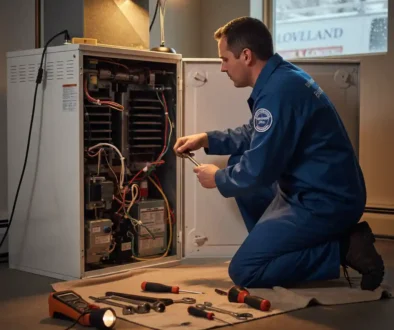
Before touching any equipment, qualified technicians test ambient carbon monoxide levels in your utility room, basement, and main living areas. This baseline measurement serves two purposes:
- Immediate safety verification – ensuring it’s safe to begin work
- Problem detection – identifying issues that develop during the inspection process
If baseline CO levels exceed 9 parts per million (ppm) anywhere in your home, the inspection stops until we determine the source.
Heat Exchanger Assessment
Visual inspection catches obvious cracks or corrosion, but fiber optic camera inspection reveals damage invisible to the naked eye. At Greeley’s altitude, heat exchangers develop stress patterns different from sea-level installations—hairline cracks often appear near the bottom where condensation collects.
What we’re specifically checking:
- Microscopic cracks at weld seams (common failure points)
- Corrosion patterns indicating incomplete combustion
- Carbon buildup suggesting poor air-fuel mixture
- Condensation damage from altitude-related combustion issues
Combustion Analysis for 4,658-Foot Elevation
Your furnace needs different air-fuel ratios than the same model installed in Denver (5,280 feet) or Fort Collins (5,003 feet). We use electronic combustion analyzers to measure:
- Oxygen levels in flue gases: Should be 6-9% for optimal efficiency
- Carbon monoxide production: Must stay below 100 ppm in the flue
- Nitrogen oxide levels: Indicates whether combustion temperature is correct
- Flue gas temperature: Reveals heat exchanger efficiency
Altitude-specific adjustments involve modifying gas valve pressure, adjusting primary air intake, and sometimes changing orifice sizes to match local atmospheric conditions.
Electrical System Verification
High Plains static electricity and voltage fluctuations from rural electrical systems create unique challenges. We test every safety switch that could shut down your system:
- Limit switches: Prevent overheating by shutting off gas flow when temperatures exceed safe levels
- Pressure switches: Confirm proper venting before allowing ignition
- Flame rollout switches: Detect backdrafting or blocked venting
- Door safety switches: Ensure combustion chamber stays sealed during operation
Gas Line Pressure Testing
Northern Colorado’s temperature swings cause gas line fittings to expand and contract, potentially loosening connections over time. We check:
- Meter pressure: Typically 7-8 inches of water column for residential service
- Manifold pressure: Should match manufacturer specifications (usually 3.5″ WC)
- Individual burner pressure: Each burner should receive consistent gas flow
- Leak detection: Electronic sensors and soapy water tests on all connections
Venting System Analysis
Proper pitch verification: Venting must slope toward the furnace at 1/4″ per foot minimum
Clearance measurements: Specific distances from combustible materials required by code
Termination inspection: Outside venting must resist local wind patterns
Draft testing: Ensures combustion gases flow in the correct direction
Many Greeley homes built before 1990 have venting systems affected by:
- Neighboring structures built after original installation
- Landscaping that redirects wind patterns
- Roof modifications that changed airflow dynamics
Documentation and Performance Reporting
Digital photography of all major components provides visual documentation of current condition.
Written measurements of key performance parameters create a baseline for future comparisons.
Detailed recommendations prioritize issues by safety risk and efficiency impact.
This documentation proves valuable for:
- Warranty claims requiring maintenance records
- Insurance requirements for heating-related coverage
- Future service technicians understanding your system’s history
- Planning major repairs or replacement timing
Warning Signs Your System May Not Survive Winter
Recognizing these indicators helps you distinguish between systems that benefit from maintenance versus those approaching replacement.
Age-Related Stress Indicators
Systems 15+ years old in Northern Colorado show stress differently than similar equipment in more moderate climates:
- Frequent cycling: Short runs followed by long off periods
- Uneven heating: Some rooms significantly warmer/cooler than others
- Longer startup times: System takes several minutes to begin producing heat
- Unusual sounds: Metallic expanding/contracting noises during temperature changes
Altitude-Related Combustion Problems
Symptoms suggesting improper altitude calibration:
- Yellow or orange flame color (should be bright blue)
- Sooty deposits around the furnace or on nearby surfaces
- Condensation inside the furnace cabinet
- Metallic smell when the system first starts each season
Wind-Related Venting Issues
Signs of backdrafting during specific weather conditions:
- System shuts down during chinook wind events
- Exhaust odors near your home during certain wind directions
- Pilot light extinguishing repeatedly on windy days
- Water stains on walls near venting terminations
Foundation Settlement Effects
Common in Greeley homes built on expansive clay soils:
- Ductwork pulled apart at joints
- Furnace seems louder than in previous years
- Rooms that suddenly became difficult to heat evenly
- Visible gaps where ducts connect to the main plenum
Efficiency Degradation Markers
Utility bill analysis reveals system decline:
- Heating costs increased 15%+ without rate changes
- System runs longer to achieve same temperatures
- Frequent thermostat adjustments needed for comfort
- Noticeable temperature differences between floors
For systems showing these warning signs—particularly those 15+ years old or recently experiencing unusual cycling patterns—scheduling service before peak demand ensures available appointment times and standard rates.
The Master Plumber Advantage for HVAC Work
Understanding why plumbing expertise matters for furnace service helps you evaluate different service providers appropriately.
Interconnected System Knowledge
87% of furnace problems we diagnose involve gas line pressure, condensate drainage, or shared venting issues that HVAC-only contractors can’t address without additional service calls. Gas line expertise becomes critical when furnace problems trace back to supply issues rather than equipment failure. Master plumbers can:
- Diagnose gas pressure restrictions affecting performance
- Repair leak issues that would require separate service calls from HVAC-only contractors
- Upgrade undersized gas lines, limiting system capacity
- Install additional gas appliances without compromising furnace performance
Condensate Drainage Systems
High-efficiency furnaces produce significant amounts of condensate that must drain properly. When these systems connect to your home’s plumbing, problems require expertise in both trades:
- Drainage backup can damage furnace components
- Improper slope causes water to pool inside the system
- Frozen condensate lines shut down the furnace entirely
- Pump failures flood utility areas and damage the flooring
Shared Venting Complications
Many Northern Colorado homes have furnaces and water heaters sharing venting systems. When problems develop, standard HVAC technicians often can’t address the complete system:
- Sizing calculations must account for both appliances
- Draft patterns affect both systems simultaneously
- Maintenance schedules should coordinate for optimal performance
- Replacement planning requires understanding both systems’ lifecycles
Code Compliance and Permit Requirements
Master plumbers stay current with local building codes, gas codes, and manufacturer requirements affecting system installation and maintenance. This expertise prevents:
- Warranty voiding from non-compliant modifications
- Safety violations that create liability issues
- Resale complications from unpermitted work
- Insurance problems from code-violating installations
Optimal Timing for Northern Colorado Maintenance
Understanding seasonal patterns helps you schedule service when it provides maximum benefit and minimum inconvenience.
September-October Service Window
Equipment condition: Systems have settled after summer inactivity, but haven’t experienced heating loads that stress components.
Weather flexibility: Mild temperatures allow rescheduling if needed without comfort concerns.
Technician availability: Off-peak scheduling provides more thorough inspections and competitive pricing.
Parts availability: Full inventory of common repair components before peak demand.
Peak Season Realities (November-February)
Service availability: Appointments become scarce, particularly during cold snaps.
Emergency rates: After-hours and weekend service costs 40-60% more than standard rates.
Parts delays: Common components may require 3-5 days of shipping during peak demand.
Completion pressure: Technicians focus on restoring heat quickly rather than thorough analysis.
Local Weather Pattern Considerations
Northern Colorado’s unpredictable fall weather can compress the optimal service window:
- Early cold snaps (sometimes in September) catch unprepared systems
- Extended warm periods (through November) delay homeowner maintenance decisions
- Rapid temperature drops stress systems that haven’t been properly maintained
Service Preparation Requirements
Access preparation: Clear pathways to the furnace area, including stored items around equipment.
Pet arrangements: Secure animals away from work areas for safety.
Adult availability: Someone over 18 must be present to authorize additional work.
Utility access: Technicians may need access to electrical panels or gas meters
Time Investment Reality
Standard maintenance: 90-120 minutes for thorough inspection and testing.
Problem diagnosis: Additional 30-60 minutes if issues are discovered
Minor repairs: Can often be completed during the same visit with approval.
Major issues: Require separate scheduling for parts ordering and installation
Making Your Furnace Maintenance Decision
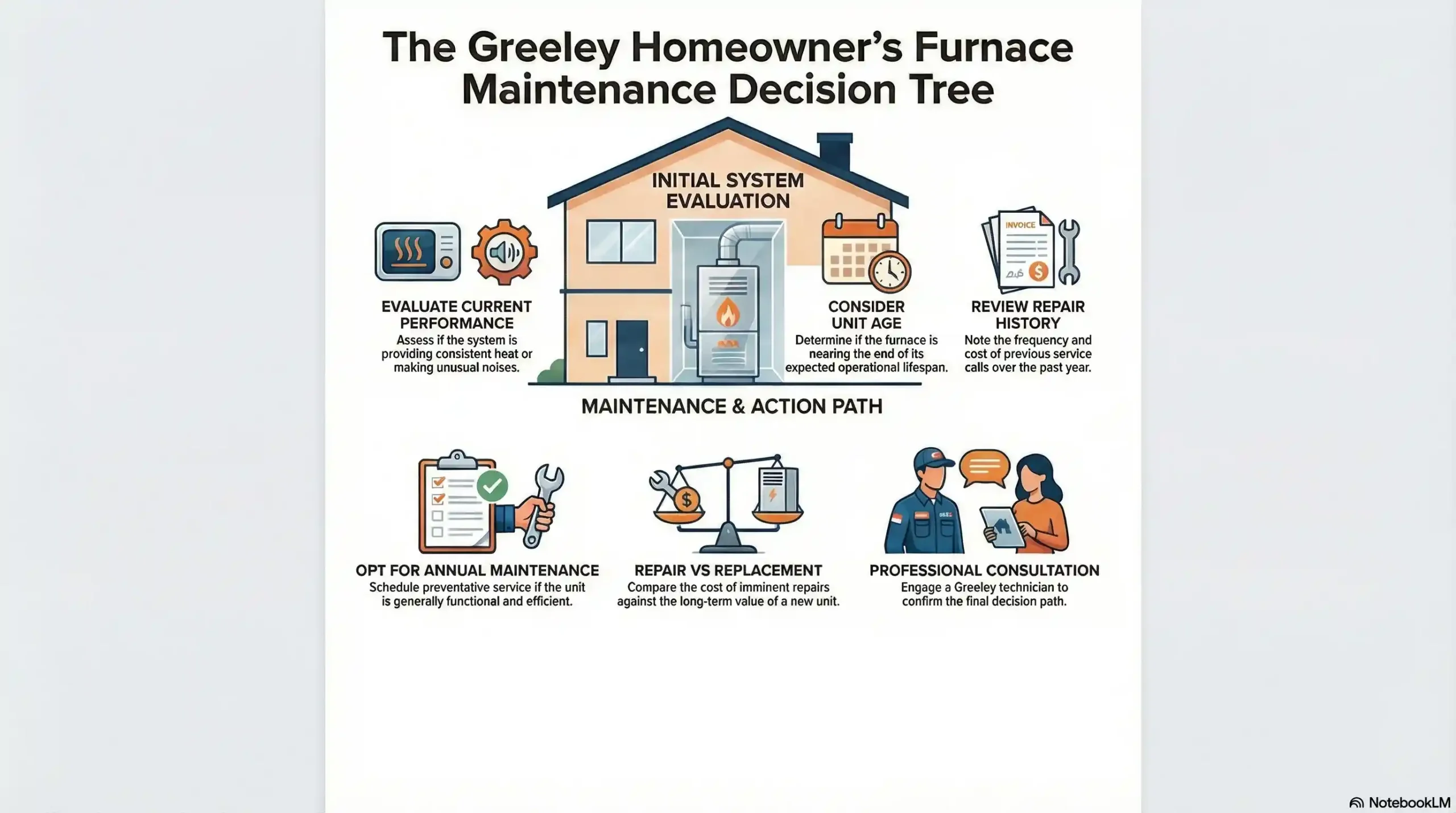
The choice isn’t simply whether maintenance is worth the cost, but whether your specific situation benefits more from professional service or accepting the risks of deferred care.
Financial Analysis Framework
System age and value:
- Systems under 10 years: Maintenance typically extends warranty coverage
- Systems 10-15 years: Maintenance prevents major repairs during the prime lifespan
- Systems over 15 years: Maintenance helps determine repair vs. replacement timing
Usage patterns:
- High-use homes (large families, home offices): Maintenance prevents inconvenient failures
- Moderate-use homes: Maintenance provides energy savings and reliability
- Low-use homes: May prefer accepting minor efficiency losses to avoid service costs
Risk tolerance:
- Low tolerance: Professional maintenance provides maximum peace of mind
- Moderate tolerance: Basic maintenance with major problem monitoring
- High tolerance: Acceptance of potential emergency repair situations
Local Expertise Evaluation
When choosing service providers, specific qualifications matter more in Northern Colorado’s unique conditions:
Altitude experience: Demonstrated knowledge of high-elevation combustion adjustments.
Local housing knowledge: Familiarity with Greeley-area construction and common problems
Multi-trade capability: Ability to address gas line, venting, and drainage issues.
Emergency availability: Local presence for urgent winter service needs
Long-Term Planning Considerations
Maintenance tracking helps predict when repairs become less cost-effective than replacement.
Performance monitoring identifies declining efficiency before it affects comfort.
The component lifecycle planning coordinates major repairs with replacement timing.
Energy efficiency planning identifies upgrade opportunities during normal replacement cycles.
Local Resources & Citations
City of Greeley Building Department: Check current permit requirements and inspection protocols for furnace installations and major repairs in Greeley.
Xcel Energy Colorado: Find current residential energy rates, efficiency rebate programs, and peak demand periods affecting Northern Colorado heating costs.
Colorado State University Extension: Access research-based information on high-altitude home maintenance, energy efficiency, and indoor air quality specific to Colorado conditions.
National Institute of Standards and Technology (NIST): Reference official combustion efficiency standards and altitude correction factors for natural gas appliances at various elevations.
Next Steps for Greeley Homeowners
Whether you choose professional maintenance, partial service, or acceptance of current risks, understanding your specific situation helps you make informed decisions.
For systems showing warning signs or approaching 15+ years of age, a professional diagnostic assessment often provides the clearest picture of your options. For newer systems or those with recent service history, basic maintenance may provide adequate protection.
The goal isn’t selling you a service you don’t need, but helping you understand what Northern Colorado’s unique conditions mean for your specific heating system and comfort requirements.
If you’re experiencing safety concerns like unusual odors, yellow flames, or carbon monoxide detector alerts, immediate professional evaluation addresses safety first, then helps determine appropriate next steps.
FAQs
-
A professional furnace tune-up typically includes:
-
Cleaning the flame sensor and burners
-
Inspecting the heat exchanger for cracks
-
Testing for carbon monoxide leaks
-
Checking gas pressure and safety switches
-