
When to Replace Your Oil Furnace: A Homeowner’s Guide for Greeley, Colorado
You’ve noticed your heating bills creeping up this winter, and that familiar oil smell seems stronger than usual. Your 16-year-old oil furnace still heats the house, but something feels off. You’re not imagining it—these are often the first signs that your heating system is beginning to fail. Here’s how to tell if you’re looking at repairs or if it’s time to plan for replacement.
Understanding Oil Furnace Lifespan in Northern Colorado’s Climate
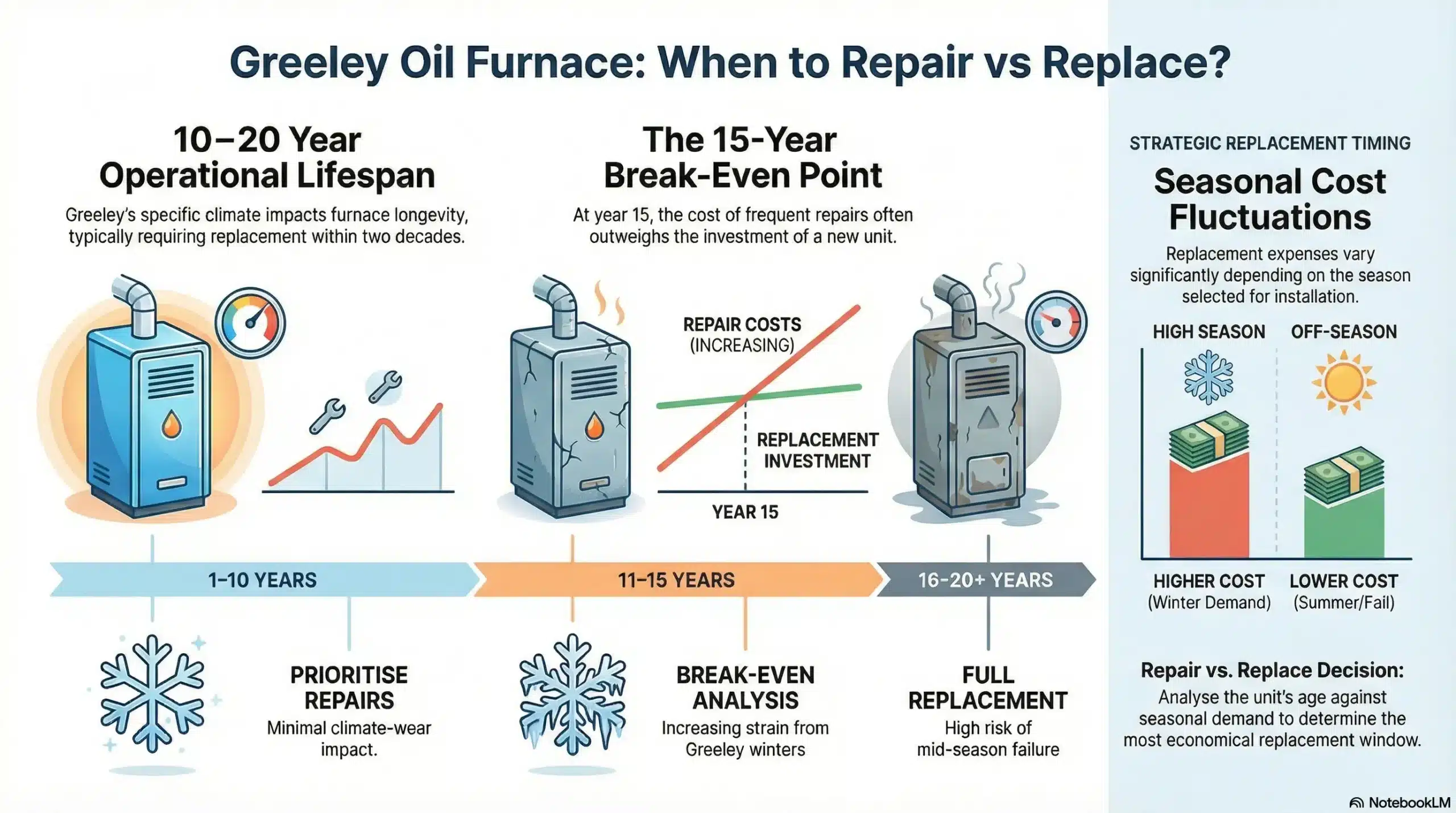
Oil furnaces in Greeley typically last 13-17 years due to our elevation and harsh winters, compared to the standard 15-20 year lifespan at lower altitudes.
Greeley sits at 4,658 feet above sea level, where thinner air affects oil combustion efficiency. Your furnace burner must work harder to achieve complete combustion, gradually wearing down the heat exchanger, burner assembly, and control systems faster than similar units at lower elevations.
The location of your home within Greeley significantly impacts furnace lifespan:
Urban Properties: Homes in established neighborhoods like Centennial Village or areas near downtown typically see furnaces last closer to the 15-year mark due to better wind protection and consistent oil delivery access.
Rural Areas: Properties west of Greeley toward the foothills or east toward the plains often experience 2-3 years shorter furnace life. Temperature swings are more extreme, heating demands are higher, and wind exposure increases system stress.
The Critical Age Window
Furnaces that begin showing problems between years 12-15 usually give you time to plan replacement strategically. Those that reach 18+ years often fail suddenly during peak heating season when replacement costs can surge 15-25% above off-season pricing.
Winter Emergency Reality: During January 2024’s extended cold snap, emergency oil furnace replacements in Greeley cost homeowners an average of $2,500-$4,000 more than planned fall installations due to premium labor rates and limited equipment availability.
Understanding where your oil furnace stands in its lifecycle helps you make informed decisions before problems become emergencies.
Free 30-minute evaluation includes combustion analysis, safety check, and honest guidance on repair vs. replacement timing.
Oil Furnace Warning Signs: Beyond Rising Energy Bills
Increasing oil consumption without usage changes, yellow flames instead of blue, and monthly filter replacements signal internal component failure requiring professional evaluation.
Combustion Efficiency Indicators
Your oil furnace provides specific warning signs that gas units don’t exhibit:
Oil Consumption Patterns:
- Normal: Consistent usage year-over-year for similar weather
- Warning Sign: 15-20% increase in oil consumption with the same thermostat settings
- Emergency: 30%+ consumption increase indicates serious combustion problems
Flame Quality Assessment:
- Healthy: Bright blue flame with minimal yellow tips
- Concerning: Orange or yellow flames during normal operation
- Dangerous: Irregular flame patterns or visible soot production
Filter Degradation Timeline:
- New System: Oil filters last 3-4 months
- Aging System: Monthly filter changes needed
- Failing System: Filters clog within 2-3 weeks due to excessive soot
The Sooting Problem
Oil furnaces that produce visible black residue around the unit base or strong petroleum odors during operation burn fuel incompletely. This creates a self-perpetuating cycle: poor combustion generates more soot, which reduces efficiency further and accelerates internal component wear.
Unlike gas furnaces, where combustion issues often stem from simple adjustments, oil furnace flame problems typically indicate worn burner nozzles, damaged heat exchangers, or contaminated fuel—repairs that often cost $1,500-$3,000.
If you’re noticing multiple warning signs or have safety concerns, a professional diagnostic can provide clarity and peace of mind.
Comprehensive oil furnace inspection with combustion testing and written recommendations. Same-day service available.
Financial Decision Framework: Repair vs. Replacement Logic
For oil furnaces over 12 years old in Greeley, repairs exceeding 40% of replacement cost rarely make financial sense due to parts scarcity and specialized labor requirements.
The Modified 40% Rule for Oil Systems
The standard “50% rule” doesn’t apply to oil furnaces because:
- Parts are more expensive and harder to source than gas components
- Fewer technicians in Northern Colorado specialize in oil systems
- Labor costs run 20-30% higher than gas furnace service
Real Cost Example: A heat exchanger replacement for a 15-year-old oil furnace costs $2,800-$3,500 installed. A new high-efficiency oil furnace costs $4,500-$6,500 installed. The math clearly favors replacement.
Seasonal Timing Impact on Costs
Peak Season Premiums (December-February):
- Emergency service calls: $200-$400 premium
- Parts expediting: 25-40% markup
- Installation scheduling: 2-3 week delays are common
- Total emergency replacement premium: $1,500-$3,000
Optimal Replacement Window (April-October):
- Standard service rates
- Better contractor availability
- Faster permit processing
- Time to research options thoroughly
The Oil Tank Factor
When evaluating replacement decisions, consider your oil tank condition. Tanks showing rust, leaks, or requiring significant repairs often tip the scales toward complete system replacement rather than furnace-only solutions.
Tank Replacement Costs:
- Underground tank removal: $3,500-$6,000
- New above-ground installation: $2,500-$4,000
- Soil testing (if required): $800-$1,200
If your tank needs attention, this is often the ideal time to evaluate fuel conversion options or invest in a complete heating system upgrade.
Safety Concerns: Oil Furnace Carbon Monoxide Risks
Oil furnaces produce different CO warning signs than gas units—watch for black residue, persistent oil odors during operation, and family health symptoms during heating season.
Recognizing Oil-Specific Safety Issues
Oil furnaces develop safety problems gradually rather than suddenly, making early detection crucial:
Physical Warning Signs:
- Black soot deposits around the furnace base
- White mineral deposits on vent pipes
- Rust stains near chimney connections
- Oil odors during normal operation
Health Symptom Patterns:
- Headaches that worsen during the heating season
- Fatigue that improves when away from home
- Flu-like symptoms without fever
- Eye or throat irritation during furnace operation
The Gradual Degradation Problem
Unlike gas furnaces that typically fail cleanly, oil systems often develop combustion issues over months. A slightly degraded burner might produce trace amounts of carbon monoxide for an entire heating season before becoming obviously dangerous.
Professional Testing Requirements:
- Combustion efficiency analysis
- Draft measurement and vent integrity
- Carbon monoxide level testing at various operating conditions
- Heat exchanger inspection for cracks or deterioration
This complexity is why oil furnaces require professional safety inspections every 2-3 years after age 10, compared to gas units that can often go longer between detailed assessments.
If you’re experiencing strong oil odors, unusual noises, or heating system failure, don’t wait.
24/7 emergency oil furnace service for Greeley and Northern Colorado. Licensed technicians with oil heating expertise.
Planning for Greeley’s Winter Realities
Oil delivery challenges and service limitations during severe weather make system reliability critical for rural Greeley properties, requiring proactive replacement planning.
Weather-Related Vulnerabilities
Greeley’s winter weather patterns create specific challenges for oil heating systems:
Oil Delivery Constraints:
- Rural roads are often impassable during blizzards
- Delivery trucks may skip difficult-access properties during storms
- Fuel gelling is possible during extreme cold snaps (below -20°F)
Service Accessibility Issues:
- Rural properties are deprioritized during emergency calls
- Parts delivery is delayed to remote locations
- Temporary heating solutions are inadequate for large rural homes
Backup Heating Reality Check
Most Greeley homes require 60,000-120,000 BTU heating capacity during winter. Portable electric heaters typically provide 1,500-5,000 BTU each, making them inadequate for primary heating during extended outages.
Realistic Backup Options:
- Wood-burning fireplace or stove (if available)
- Whole-house generator with electric backup heating
- Propane space heaters (properly vented)
- Temporary relocation during repairs
Gas Line Infrastructure Assessment
Natural gas availability varies dramatically across Greeley:
Well-Served Areas:
- Downtown Greeley and established neighborhoods
- Areas south of 10th Avenue
- Most subdivisions built after 1980
Limited or No Service:
- Rural properties beyond city limits
- Areas north and west toward Windsor
- Properties more than 300 feet from existing mains
Gas line extensions beyond 100 feet often cost $50-$150 per linear foot, making conversion economically questionable for many rural properties.
Evaluating Fuel Conversion Options
Gas conversion makes financial sense when existing gas lines are within 100 feet of your home, and your oil furnace needs replacement, but rural properties often face prohibitive connection costs.
Conversion Cost Analysis
Typical Gas Conversion Investment:
- New gas furnace: $3,500-$5,500
- Gas line installation (under 50 feet): $1,200-$2,500
- Meter installation and connection: $800-$1,500
- Venting modifications: $500-$1,200
- Electrical updates: $400-$800
- Total: $6,400-$11,500
Extended Line Runs:
- Gas lines over 100 feet: Add $5,000-$15,000
- Boring under driveways/landscaping: Add $2,000-$5,000
- Utility easement requirements: Potential delays and additional costs
Regulatory and Timing Considerations
Fuel conversion requires coordination with Xcel Energy and involves:
- Building permit application and approval
- Utility service application and scheduling
- City inspection requirements
- Timeline: 6-12 weeks during non-peak seasons
During peak installation periods (September-November), the process can extend to 16+ weeks due to high demand for both contractors and utility service connections.
Long-Term Cost Comparison
10-Year Operating Cost Projection (2,000 sq ft home):
Oil Heating:
- Annual fuel cost: $2,400-$3,200 (including delivery)
- Maintenance/repairs: $400-$800 annually
- 10-year total: $28,000-$40,000
Natural Gas:
- Annual fuel cost: $1,200-$1,800
- Maintenance/repairs: $200-$400 annually
- 10-year total: $14,000-$22,000
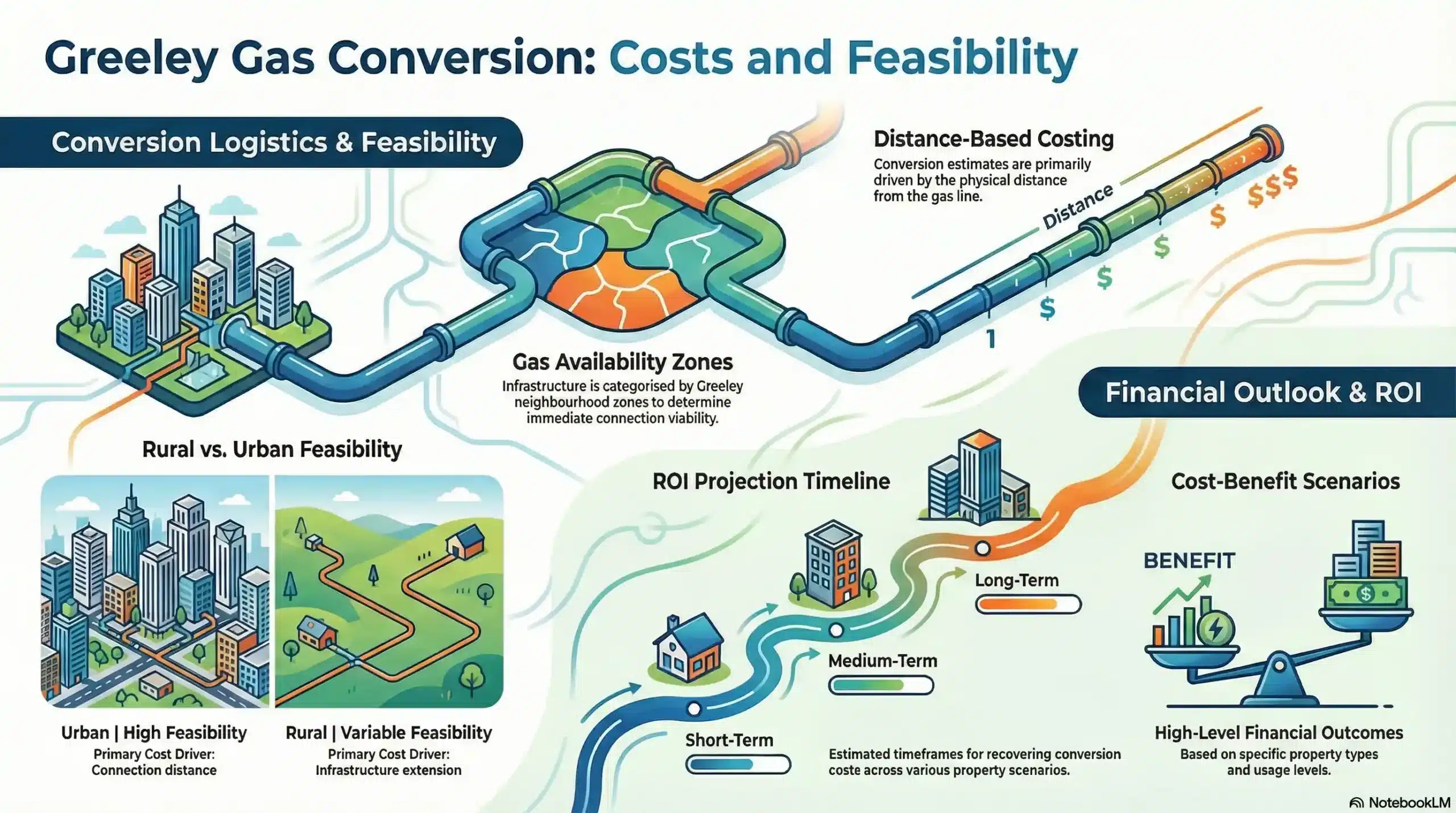
These projections assume stable fuel pricing, but natural gas shows less price volatility than heating oil historically.
Local Resources
City of Greeley Building Division: Check current permit requirements and fees for furnace replacement and fuel conversion projects.
Xcel Energy Colorado: Verify natural gas line availability for your Greeley property and access rebate programs for high-efficiency furnace installations.
Colorado State University Extension: Access energy efficiency resources and heating system maintenance guidance specific to Northern Colorado climate conditions.
Weld County Health Department: Find carbon monoxide safety information and emergency procedures for heating system safety concerns.
Taking Action: Professional Assessment vs. Emergency Response
Professional oil furnace assessment costs $150-$300 but prevents thousands in emergency replacement costs by identifying problems before complete system failure.
What Professional Assessment Includes
Comprehensive oil furnace evaluation involves:
Combustion Analysis:
- Burner efficiency measurement
- Exhaust gas composition testing
- Heat exchanger inspection
- Burner nozzle and flame evaluation
Safety System Testing:
- Carbon monoxide level monitoring
- Vent draft measurement
- Control system functionality
- Emergency shutdown testing
Component Condition Assessment:
- Heat exchanger integrity
- Burner assembly wear
- Control system reliability
- Oil tank and line inspection
Choosing the Right Contractor
Oil furnace expertise differs significantly from general HVAC knowledge. Look for contractors who:
- Maintain oil burner technician certification
- Stock oil furnace parts locally
- Provide combustion analysis equipment
- Offer 24/7 emergency oil furnace service
Questions to Ask Potential Contractors:
- “How many oil furnaces do you service annually?”
- “Do you stock common oil furnace parts?”
- “Can you perform combustion efficiency testing on-site?”
- “What’s your typical response time for oil furnace emergencies?”
Emergency vs. Planned Replacement
Emergency Replacement Scenario:
- Limited contractor availability
- Rushed equipment selection
- Premium pricing for expedited service
- Temporary heating solutions rare equired
- High stress decision-making
Planned Replacement Benefits:
- Multiple contractor quotes
- Equipment research and selection time
- Off-season pricing advantages
- Coordinated installation scheduling
- Informed decision-making process
The difference in total cost between emergency and planned replacement often exceeds $2,000-$4,000 for comparable equipment and installation quality.
During Greeley’s 2024 February freeze, emergency calls increased 340%. Don’t wait until your neighbors are competing for the same limited service slots.
If you’re experiencing any of these warning signs with your oil furnace, the next step is pa rofessional system evaluation to determine whether strategic repairs or planned replacement mmakethe most sense for your situation and budget. Taking action before emergency failure gives you control over timing, costs, and equipment selection—advantages that disappear once your heating system fails during a Colorado winter.
Free 30-minute evaluation includes combustion analysis, safety check, and honest guidance on repair vs. replacement timing.
FAQs
-
Oil furnaces in Greeley typically last 13-17 years due to the 4,658-foot elevation and harsh winters, compared to 15-20 years at lower altitudes. Higher altitude forces burners to work harder, accelerating wear on heat exchangers and combustion components. Professional assessment after 12 years helps determine remaining lifespan and plan replacement timing