How Long Do Oil Furnaces Last? Lifespan and Replacement Guide
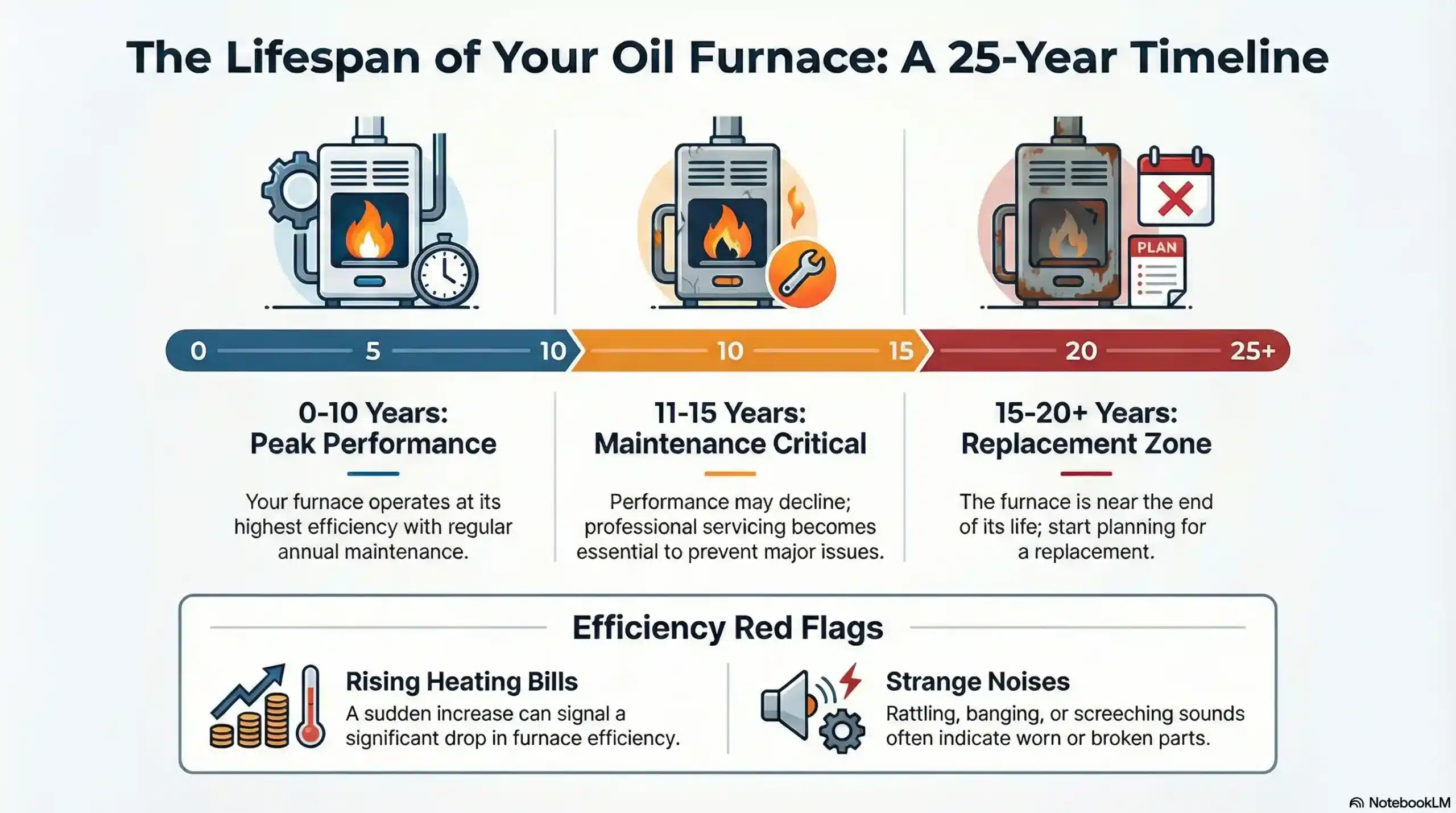
Most oil furnaces have an average lifespan of 15 to 20 years, though routine maintenance can extend a high-quality unit’s life to 25 years or more. If your heating system is approaching the two-decade mark, rising energy bills and frequent repairs are the most common signs that a replacement is necessary.
Key Takeaways: Maximizing Your Oil Furnace Investment
-
Plan for a 15–20 Year Lifecycle: While oil furnaces are durable “workhorses,” their optimal performance window typically closes after two decades.
-
Prioritize Proactive Maintenance: Routine professional cleaning and inspections are the single most effective way to extend your system’s longevity beyond the average lifespan.
Is your furnace over 15 years old? [Schedule a Professional Longevity Assessment Today]
-
Monitor “Efficiency Red Flags”: Sudden spikes in energy bills or frequent minor repairs are often early warnings that a system is failing and costing you more than a replacement would.
-
Listen to Your Home: Physical symptoms like uneven heating across rooms or unusual noises (banging/rattling) indicate internal wear that requires immediate expert assessment.
-
Expert Installation is Critical: The lifespan and efficiency of your unit are heavily dependent on the quality of the initial installation.
-
Act Before a Winter Crisis: If your unit is approaching the 15-year mark, consulting with a specialist now can prevent an emergency failure during a Northern Colorado cold snap.
Furnace Lifespan:
An oil furnace is a sturdy workhorse, designed to provide consistent warmth for your home for many years. On average, an oil furnace can last between 15 and 20 years with proper maintenance. However, this lifespan can vary depending on factors such as usage, maintenance, and the quality of installation.
Signs Your Oil Furnace Needs Replacement:
Over time, wear and tear can take a toll on your oil furnace, leading to decreased efficiency and reliability. Here are some telltale signs that it may be time to replace your oil furnace:
– Age: If your oil furnace is approaching or exceeding the 15 to 20-year mark, it’s worth considering a replacement, especially if you’ve noticed a decline in performance.
– Increased Repairs: Have you found yourself calling for repairs more frequently? A sudden surge in repair needs could indicate that your furnace is nearing the end of its lifespan.
– Rising Energy Bills: An aging oil furnace tends to become less efficient, resulting in higher heating bills. If you’ve noticed a steady increase in your energy costs, it could be a sign that your furnace is struggling to keep up.
– Strange Noises: Unusual noises such as banging, rattling, or whistling coming from your furnace can indicate underlying issues that may warrant a replacement.
– Uneven Heating: Are certain areas of your home consistently colder than others? This could be a sign that your furnace is no longer distributing heat evenly, signaling the need for a replacement.
Why Choose Top-Notch Plumbing, Heating & Air?
When it’s time to replace your oil furnace, trust the HVAC experts at Top-Notch Plumbing, Heating & Air to deliver top-quality service and products. Our team of skilled technicians specializes in furnace installation and replacement, ensuring that your new system is installed correctly for optimal performance.
Regular Maintenance for Extended Lifespan:
While the average lifespan of an oil furnace is between 15 and 20 years, routine maintenance can help extend its longevity. At Top-Notch Plumbing, Heating & Air, we offer comprehensive maintenance services to keep your furnace running smoothly year after year. From cleaning and inspections to tune-ups and repairs, we’ve got you covered.
Industry Resources & Citations
-
U.S. Department of Energy: Furnaces and Boilers The official government guide on heating system efficiency. This resource provides technical benchmarks for AFUE (Annual Fuel Utilization Efficiency) and explains how modern high-efficiency units (reaching up to 98.5%) compare to older fossil fuel systems.
-
ASHRAE: HVAC Equipment Life Expectancy Chart ASHRAE (the American Society of Heating, Refrigerating and Air-Conditioning Engineers) is the leading global authority on HVAC standards. Their data provides the industry-standard “median life expectancy” for gas and oil-fired furnaces, currently cited at approximately 18 years.
-
Energy Star: Maintenance Checklist A comprehensive resource from the EPA’s Energy Star program detailing the specific maintenance steps—such as tightening electrical connections and lubricating moving parts—required to ensure a furnace reaches its maximum operational lifespan.
In conclusion, the lifespan of an oil furnace can vary depending on various factors, but with proper maintenance and timely replacement, you can enjoy reliable warmth for years to come. If you suspect that your oil furnace is nearing the end of its lifespan or if you’re experiencing any issues with your heating system, don’t hesitate to contact Top-Notch Plumbing, Heating & Air for expert assistance. Visit our heating furnace repair solutions page to learn more about our services and schedule an appointment today.
FAQs
-
On average, a well-maintained oil furnace lasts between 15 and 20 years. With diligent annual service, some high-quality units can remain functional for up to 25 years.