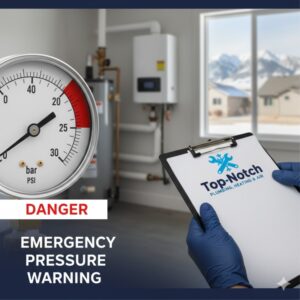
Boiler pressure is considered dangerous when it exceeds 30 PSI, which triggers your safety relief valve and indicates a high risk of system failure. If your gauge is in the “Red Zone” or discharging steam, turn off the electrical switch and contact a licensed professional immediately at (970) 404-7586.
Emergency Boiler Service: Call (970) 404-7586 Now
Understanding Normal vs. Dangerous Boiler Pressure
Normal Pressure Ranges
Before identifying dangerous levels, you must understand what normal looks like. Residential boilers typically operate safely within these ranges:
- Cold System (heating off): 12-15 PSI (0.8-1.0 bar)
- Hot System (heating running): 20-25 PSI (1.4-1.7 bar)
- Safety Valve Activation: Around 30 PSI (2.1 bar)
- Dangerous Territory: Above 30 PSI (2.1 bar)
Your boiler’s pressure gauge usually features color-coded zones:
- Green Zone: Safe operating range (12-25 PSI / 0.8-1.7 bar)
- Yellow Zone: Caution range (25-30 PSI / 1.7-2.1 bar)
- Red Zone: Dangerous territory (above 30 PSI / 2.1 bar)
When Pressure Becomes Dangerous
Boiler pressure problems escalate to dangerous levels when:
- Pressure exceeds 30 PSI (2.1 bar) – Risk of pressure relief valve activation
- Rapid pressure spikes during heating cycles
- Pressure remains above 25 PSI when the system is cold
- Gauge readings fluctuate wildly during operation
- Steam or water is discharged from the pressure relief valve
Industry safety standards consistently show that boiler systems operating above manufacturer specifications experience significantly higher component failure rates and pose increased safety risks to homeowners.
Critical Warning Signs: When Pressure Becomes Dangerous
Immediate Danger Indicators
Call Top-Notch Plumbing immediately (970-404-7586) if you observe:
1. Pressure Relief Valve Activation
- Water or steam is discharging from the external copper pipe
- Continuous dripping after a pressure spike
- Valve fails to reseat properly after activation
2. Extreme Pressure Readings
- Gauge needle in red zone (above 30 PSI / 2.1 bar)
- Digital displays showing error codes
- Pressure is climbing rapidly during the heating cycle
3. System Sounds and Vibrations
- Banging or hammering in pipes (water hammer)
- High-pitched whistling from the boiler unit
- Excessive vibration in heating system components
4. Visible System Stress
- Leaks at pipe joints or radiator connections
- Boiler casing deformation or bulging
- Wet patches around the boiler base or pipework
Secondary Warning Signs
These symptoms indicate developing boiler pressure problems that could become dangerous without professional intervention:
- Frequent pressure loss requiring constant refilling
- Uneven radiator heating despite adequate pressure
- Increased energy bills from system inefficiency
- Strange metallic tastes in hot water (indicating system corrosion)
Immediate Safety Actions for Dangerous Pressure
If your boiler shows dangerous pressure levels, follow these emergency steps:
Step 1: Ensure Personal Safety
- Do not touch hot surfaces – boiler components may exceed 200°F
- Keep children and pets away from the boiler area
- Do not attempt any adjustments to valves or controls
Step 2: Emergency Shutdown (Only if Safe and Accessible)
- Turn off the boiler at the electrical switch (if easily accessible)
- Do not attempt to adjust gas valves – this requires professional training
- Do not bleed radiators or touch any valves during high-pressure situations
Step 3: Monitor and Document
- Take photos of pressure gauge readings from a safe distance
- Note any unusual sounds or visible leaks
- Record the time of occurrence for professional diagnosis
- Do not investigate further – leave diagnosis to professionals
Step 4: Contact Professionals Immediately
Call Top-Notch Plumbing’s emergency line: (970) 404-7586
Our certified technicians respond to dangerous pressure emergencies throughout Northern Colorado. Do not attempt repairs yourself – boiler pressure systems require professional expertise and specialized tools.
Common Causes of Dangerous Boiler Pressure Problems
Understanding why pressure becomes dangerous helps prevent future occurrences:
1. Expansion Vessel Failure
The most common cause, accounting for 65% of dangerous pressure cases, in our experience.
- Symptoms: Pressure rises dramatically when heating is activated
- Danger Level: High – can lead to pressure relief valve constant discharge
- Professional Solution Required: Expansion vessel replacement or recharging
2. Overfilling During Maintenance
- Cause: Excessive water addition after radiator bleeding
- Immediate Risk: System overpressurization during heating cycle
- Prevention: Never exceed 1.2 bar when refilling the cold system
3. Faulty Pressure Relief Valve
- Warning Signs: Valve fails to open at 3 bar or won’t close after activation
- Danger: No safety pressure release = explosion risk
- Critical: Requires immediate professional replacement
4. Internal Heat Exchanger Problems
Industry data shows that heat exchanger defects are a leading cause of dangerous boiler pressure incidents, requiring immediate professional attention.
- Symptoms: Gradual pressure increases over days/weeks
- Risk: Can lead to catastrophic system failure
- Solution: Professional diagnosis and potential boiler replacement
5. Blocked or Frozen Condensate
Particularly common in Northern Colorado’s winter climate:
- Temperature Factor: Occurs when outdoor temps drop below 20°F
- Pressure Impact: Creates backpressure leading to dangerous levels
- Emergency Action: Call professionals – never attempt to clear frozen condensate yourself

What Homeowners Can Safely Observe vs. What Requires Professionals
What Homeowners Can Safely Monitor:
Visual Pressure Gauge Observation
- Safe: Reading gauge numbers and noting trends from outside the unit
- Frequency: Weekly monitoring during heating season
- Action: Document readings and call professionals if concerning changes occur
External Leak Detection
- Method: Visual inspection of visible areas around the boiler
- Focus Areas: Floor around unit, visible pipe connections
- Important: Do not touch or investigate any components – only observe and report
System Behavior Changes
- Monitor: Unusual sounds, performance changes, error codes
- Document: Changes in heating effectiveness or hot water delivery
- Professional Note: All unusual behavior should be professionally evaluated
What Always Requires Professional Expertise:
Any Physical Adjustments to the System
- Pressure relief valve inspection – Requires specialized training and tools
- All valve adjustments – Even “simple” valves can be dangerous when under pressure
- Internal component access – Opening boiler units voids warranties and creates safety risks
All Pressure-Related Repairs
- Expansion vessel work – Involves pressurized gas systems requiring professional certification.
- Heat exchanger issues – Complex diagnostics requiring specialized equipment
- Any component replacement – Boiler repairs must meet strict safety codes
Gas System Work
- All gas line connections – Legally require Gas Safe/licensed professional certification.
- Gas valve operations – Improper adjustment creates explosion and carbon monoxide risks
- Combustion system work – Requires professional testing and safety verification.
Remember: Top-Notch Plumbing’s technicians hold Colorado Master Plumber licenses (MP00600505) and provide 1-year warranties on all pressure system work. Attempting DIY repairs on pressurized systems can create serious safety hazards and may void insurance coverage.
When to Call Top-Notch Professionals
Emergency Situations (Call Immediately):
- Pressure above 3 bar with the system running
- Visible steam discharge from any component
- Water is leaking from the pressure relief valve
- Unusual sounds combined with high pressure
- Boiler lockout with pressure-related error codes
Routine Professional Service Needs:
- Annual pressure system inspection (recommended by manufacturer)
- Expansion vessel maintenance (every 3-5 years)
- Pressure relief valve testing (annually)
- System rebalancing after major repairs
Seasonal Maintenance (Northern Colorado Specific):
- Pre-winter pressure optimization (September-October)
- Post-freeze system checks (March-April)
- Summer system dormancy preparation (May-June)
Prevention and Maintenance for Safe Pressure
Monthly Homeowner Tasks:
- Record pressure readings when the system is cold
- Visual inspection of accessible components
- Note any pressure changes or unusual behavior
- Check thermostat settings for reasonable temperatures
Professional Annual Maintenance:
Based on manufacturer recommendations and our 60+ years combined experience:
- Comprehensive pressure system testing
- Expansion vessel inspection and recharging
- Pressure relief valve operation verification
- Heat exchanger cleaning and inspection
- System chemistry analysis (inhibitor levels, pH testing)
The Top-Notch Advantage:
As Greeley’s Best Plumber for five consecutive years, our maintenance program includes:
- Predictive pressure monitoring using advanced diagnostic tools
- Preventive expansion vessel servicing before failure occurs
- Emergency response availability for pressure-related issues
- 1-year warranty on all pressure system work
Northern Colorado Climate Considerations
Winter Pressure Challenges:
Colorado’s extreme temperature swings create unique pressure stresses:
Freeze-Thaw Cycles
- Temperature Range: -10°F to 50°F in 24 hours
- Pressure Impact: Rapid expansion/contraction stresses
- Professional Solution: Enhanced system monitoring during weather extremes
High Altitude Effects
- Elevation: Northern Colorado averages 5,000+ feet
- Boiling Point: Water boils at a lower temperature, affecting pressure dynamics
- Adjustment: Professional calibration for altitude-specific operation
Dry Climate Impact
- Low Humidity: Accelerates system component aging
- Static Electricity: Can affect electronic pressure sensors
- Maintenance: More frequent system inspections are recommended
Seasonal Professional Services:
Fall Preparation (September-October):
- Pressure system winterization
- Expansion vessel pre-season testing
- Emergency contact information update
Spring Inspection (March-April):
- Post-winter system assessment
- Pressure component wear evaluation
- Summer operation preparation
Current Industry Standards and Safety Protocols
Top-Notch Plumbing follows the latest industry safety standards for pressure system maintenance:
Professional Certification Requirements
- Gas Safe Certification: All pressure system work requires certified professionals
- Manufacturer Training: Our technicians receive ongoing training on the latest safety protocols
- Industry Standards: We follow ASME Boiler and Pressure Vessel Codes for all installations and repairs
Safety Best Practices
- Annual Inspections: Professional pressure system testing prevents the most dangerous situations
- Preventive Maintenance: Regular service identifies potential pressure problems before they become dangerous
- Emergency Response: Immediate professional response to high-pressure situations prevents property damage and injury
Equipment Standards
- Pressure Relief Valve Testing: Professional annual testing ensures safety systems function properly
- Expansion Vessel Maintenance: Regular professional inspection prevents pressure buildup
- System Monitoring: Advanced diagnostic tools identify pressure trends before they become dangerous
External Resources and Professional Citations
1. Ideal Heating – Boiler Pressure Safety Guidelines
- Key Information: Comprehensive guide on pressure relief valve operation and safety thresholds that validates our emergency procedures
- Relevance: Manufacturer specifications for normal pressure ranges (1.0-2.0 bar) align with our professional installation standards
2. ASME Boiler and Pressure Vessel Code Standards
- Key Information: Industry-standard pressure settings for residential systems (12-30 PSI operating range) that form the foundation of our installation practices
- Relevance: Professional installation and maintenance specifications that Top-Notch technicians follow for safe operation in Northern Colorado’s climate
3. British Gas Professional Pressure Maintenance Guidelines
- Key Information: Homeowner safety procedures and professional service recommendations that mirror our customer education approach
- Relevance: Clear guidelines on when to attempt DIY fixes vs. calling qualified professionals – exactly what we teach our Northern Colorado customers
Conclusion: Your Safety Is Our Priority
Dangerous boiler pressure situations are preventable with proper knowledge and professional support. The key is understanding when normal pressure fluctuations become genuine safety concerns requiring immediate professional intervention.
Remember the critical thresholds:
- Normal: 12-25 PSI during operation
- Caution: 25-30 PSI (monitor closely)
- Dangerous: Above 30 PSI (call professionals immediately)
As Northern Colorado’s most trusted heating experts, Top-Notch Plumbing, Heating & Air combines 60+ years of experience with the latest safety protocols to keep your family safe and comfortable. Our team of three Colorado-licensed master plumbers understands the unique challenges of boiler operation in our high-altitude, variable climate.
Don’t wait for dangerous pressure situations to develop. Contact us today for comprehensive pressure system inspection and maintenance that prevents problems before they become emergencies.
FAQs
-
A cold residential boiler should typically read between 12 and 15 PSI (0.8–1.0 bar). If it drops below 10 PSI, your system may not fire up.


