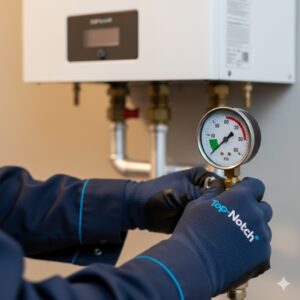
Boiler PSI Problems: Complete 2026 Troubleshooting Guide
Normal boiler pressure should typically read between 12–15 PSI when cold and 20–25 PSI when operating; anything above 30 PSI triggers a safety emergency. If your gauge is outside these ranges, you could be facing a failed expansion tank or a system leak that requires immediate attention. At Top-Notch Plumbing, Heating & Air, we provide 24/7 expert diagnostics to resolve boiler PSI problems across Northern Colorado—keeping your home safe and your heating efficient.
[Schedule Emergency Boiler Repair] or Call (970) 404-7586 for 24/7 Service.
What Is Boiler PSI and Why Does It Matter?
Boiler PSI (pounds per square inch) measures the water pressure in your closed-loop heating system. Think of it as your system’s vital sign—when the boiler PSI is right, heated water circulates efficiently through your pipes and radiators. When boiler pressure problems occur, your entire heating system suffers.
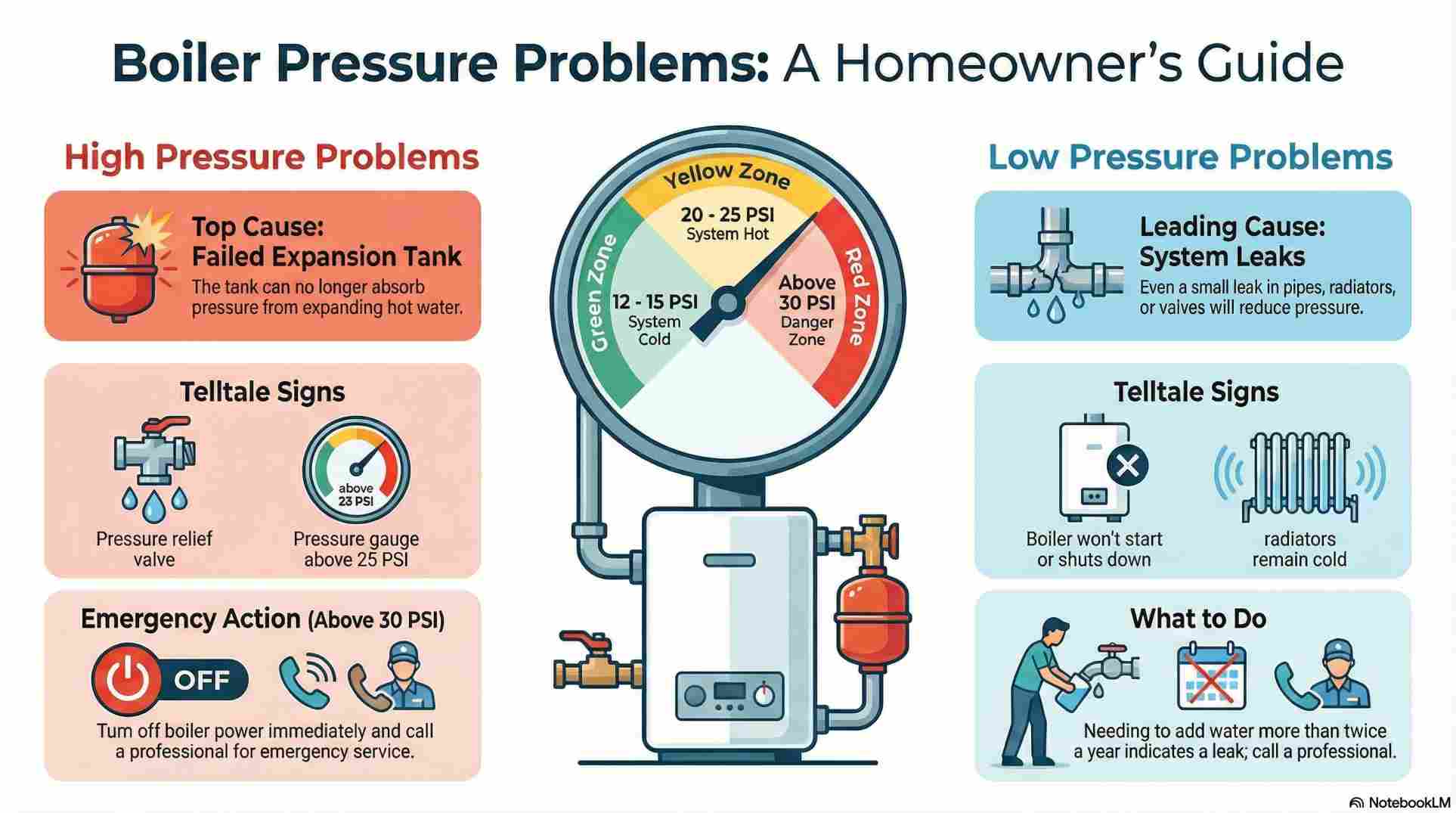
Normal boiler pressure ranges:
- Cold system: 12-15 PSI
- Hot system: 20-25 PSI
- Safety threshold: 30 PSI (pressure relief valve activates)
- Danger zone: Above 30 PSI
The pressure naturally fluctuates as your boiler heats and cools. Water expands when heated, causing pressure to rise during heating cycles—this is completely normal. However, dramatic swings or pressures consistently outside the normal range indicate underlying problems that require immediate attention from certified technicians.
Understanding Your Boiler Pressure Gauge: Reading the Warning Signs
Your boiler’s pressure gauge is typically located on the front control panel, displaying either analog (needle) or digital readings. Most gauges use color coding:
- Green zone: 12-20 PSI (optimal range)
- Yellow zone: 20-25 PSI (caution—monitor closely)
- Red zone: Above 25 PSI (immediate action required)
Pro tip from our technicians: Check your pressure when the system is cold (hasn’t run for 2+ hours) for the most accurate baseline reading. This eliminates thermal expansion effects and gives you true system pressure.
High Boiler PSI: When Pressure Becomes Dangerous
Immediate Safety Concerns
High boiler PSI isn’t just inefficient—it’s potentially dangerous. When boiler pressure problems involve readings exceeding 30 PSI, your pressure relief valve (PRV) activates, releasing hot water to prevent catastrophic failure. While this safety mechanism works, it indicates serious boiler pressure problems requiring professional attention.
Signs of high boiler pressure:
- Pressure gauge reading consistently above 25 PSI
- Water dripping from the pressure relief valve
- Unusual banging or whistling sounds
- Radiators overheating
- System cycling on and off frequently
Root Causes of High Boiler PSI
1. Failed Expansion Tank (Most Common Cause)
The expansion tank absorbs increased water volume as your system heats up. When it fails, pressure has nowhere to go except up.
How expansion tanks fail:
- Waterlogged tank: The internal diaphragm ruptures, allowing water to fill the air chamber
- Lost air charge: The pre-charged air pressure drops below 12 PSI
- Improper sizing: Tank too small for system volume
Diagnostic test: Turn off your boiler, let it cool, then check the tank’s air pressure using the Schrader valve on top. It should read 12 PSI when the system is drained. If water comes out instead of air, the tank has failed.
2. Overfilled System
Adding too much water during repressurization creates excess volume with nowhere to expand during heating cycles.
Common scenarios:
- DIY filling without proper monitoring
- Automatic fill valve stuck open
- Inexperienced technician overfills during service
Quick fix: Drain water from the system until cold pressure reads 12-15 PSI. However, investigate why overfilling occurred to prevent recurrence.
3. Malfunctioning Pressure Relief Valve
A PRV that doesn’t open at the proper pressure (typically 30 PSI) allows dangerous pressure buildup.
Warning signs:
- No water discharge despite high pressure readings
- PRV is constantly dripping (stuck partially open)
- Corrosion or mineral buildup around the valve
Safety note: Never cap or disable a pressure relief valve. If it’s malfunctioning, shut down your system and call a professional immediately.
4. Blocked or Restricted System Components
Restrictions in pipes, radiators, or heat exchangers force your boiler to work harder, increasing pressure.
Common culprits:
- Mineral deposits in pipes
- Sludge buildup in radiators
- Closed isolation valves
- Debris in circulation pumps
5. Temperature-Related Pressure Spikes
Excessively high water temperatures cause greater thermal expansion, pushing pressure beyond safe limits.
Causes of overheating:
- Faulty aquastat (temperature controller)
- Circulation pump failure
- Restricted water flow
- Oversized boiler for the system
Professional Solutions for High Pressure
Signs requiring immediate professional attention:
- Pressure consistently above 25 PSI
- Pressure relief valve discharge
- Unusual system noises
- Visible leaks around components
Professional repairs may include:
- Expansion tank replacement
- Pressure relief valve replacement
- System flushing to remove restrictions
- Aquastat calibration or replacement
- Complete system rebalancing
Emergency action: If pressure exceeds 30 PSI, turn off boiler power and contact Top-Notch immediately at (970) 404-7586.
Low Boiler PSI: When Your System Can’t Build Pressure
Why Low Pressure Shuts Down Your Heating
Most modern boilers have low-pressure cutoff switches that prevent operation below 8-10 PSI. This safety feature prevents dry firing, which can cause catastrophic damage to your boiler’s heat exchanger. Understanding these boiler pressure problems helps you recognize when professional intervention is needed.
Symptoms of low boiler pressure:
- The boiler won’t start or shuts down frequently
- Uneven heating throughout the house
- Radiators staying cold despite thermostat calls
- Error codes on modern boiler displays
- Pressure gauge reading below 10 PSI
Primary Causes of Low Boiler PSI
1. System Leaks (Leading Cause)
Even small leaks gradually reduce system pressure over time. Water escapes through compromised seals, joints, or components.
Common leak locations:
- Radiator valves and connections: Look for white mineral deposits or rust stains
- Pipe joints in basements or crawl spaces: Check for damp spots or actual dripping
- Boiler internal components: Heat exchanger, circulation pumps, or internal piping
- Expansion tank connections: Especially where the tank connects to the main piping
- Pressure relief valve: May weep slowly without obvious dripping
Detective work: Our technicians recommend checking these areas monthly during heating season. Small leaks become major problems if ignored.
2. Recently Bled Radiators
Bleeding air from radiators removes both air and some water from the system, reducing overall pressure. This is normal but requires refilling.
Post-bleeding protocol:
- Check the pressure gauge after bleeding all radiators
- Refill system to 12-15 PSI if necessary
- Bleed radiators again if air returns
- Monitor pressure for several days to ensure stability
3. Natural System Water Loss
Closed-loop systems naturally lose small amounts of water through:
- Microscopic leaks in pipe joints
- Evaporation through automatic air vents
- Absorption into system components
Annual maintenance: Expect to add water 1-2 times per year in healthy systems. More frequent additions indicate leak problems requiring professional diagnosis.
4. Automatic Fill Valve Problems
The automatic fill valve maintains minimum system pressure by adding water when needed. When it fails, pressure drops aren’t automatically corrected.
Fill valve failures:
- Stuck closed: Won’t add water despite low pressure
- Debris blockage: Mineral deposits prevent proper operation
- Worn diaphragm: Valve doesn’t respond to pressure changes
- Incorrect adjustment: Set too low to maintain proper pressure
Professional Diagnosis and Solutions
What homeowners can safely observe:
- Visual inspection for obvious leaks around visible piping
- Checking pressure gauge readings when the system is cold
- Noting any unusual sounds or system behavior
- Observing radiator heating patterns
Always contact Top-Notch professionals for:
- Any pressure adjustments or system filling
- Component testing or replacement
- System diagnosis beyond visual inspection
- Any uncertainty about system operation
When to Call Professionals
Contact Top-Notch Plumbing, Heating & Air immediately if you experience:
- Pressure dropping more than once per month
- Multiple leak locations
- Pressure loss accompanied by unusual noises
- Any uncertainty about safe procedures
- Repeated problems after attempted repairs.
Advanced Troubleshooting: Special Circumstances
Multi-Story Home Considerations
Taller buildings require higher minimum pressures to overcome gravity and ensure adequate circulation to upper floors.
Pressure requirements by building height:
- Single story: 12-15 PSI minimum
- Two-story: 15-18 PSI minimum
- Three story: 18-22 PSI minimum
- Formula: Add 1 PSI for every 2.3 feet of vertical height
Seasonal Pressure Variations
Winter pressure increases: Cold outdoor temperatures make your boiler work harder, potentially causing pressure spikes. This is especially common during:
- Extended cold snaps (-10°F and below)
- Rapid temperature drops
- First cold days of the season
Summer pressure drops: Systems often lose pressure during idle months due to:
- Natural water evaporation
- Thermal contraction as systems cool
- Small leaks are becoming apparent without heating masking them
Zone System Complications
Multi-zone systems with individual circulation pumps can experience unique pressure problems:
Zone isolation valve issues:
- Closed valves increase pressure in the remaining zones
- Partially closed valves create flow restrictions
- Failed zone valves cause pressure imbalances
Pump-related pressure problems:
- Multiple pump speeds affect system pressure
- Failed pumps reduce circulation, causing pressure buildup
- Incorrectly sized pumps create pressure variations
Emergency Procedures: When to Act Fast
High-Pressure Emergencies (Above 30 PSI)
Immediate steps:
- Turn off boiler power immediately
- Allow system to cool naturally—do NOT add cold water
- Check if the pressure relief valve is discharging
- If no discharge from PRV, evacuate the area and call emergency services
- Contact Top-Notch for emergency service: (970) 404-7586
Never attempt to:
- Manually reduce pressure while the system is hot
- Cap or disable pressure relief valves
- Add cold water to the hot system
- Continue operating above 30 PSI
Low Pressure Emergencies (Below 8 PSI)
Immediate steps:
- Turn off the boiler to prevent dry firing
- Inspect for major leaks requiring water shutoff
- Do not attempt to add water to the system
- Contact Top-Notch for emergency service
- Document pressure readings and any visible issues for the technician
Professional Maintenance: Preventing Pressure Problems
Annual Inspection Checklist
Top-notch technicians recommend these annual maintenance tasks:
Expansion tank service:
- Check air pressure (should equal cold water pressure)
- Inspect for external corrosion
- Test mounting brackets and connections
- Replace if over 10 years old
Pressure relief valve testing:
- Manual test operation annually
- Check for mineral buildup or corrosion
- Ensure proper discharge piping
- Replace if discharge doesn’t stop cleanly
System flushing benefits:
- Removes mineral deposits and debris
- Improves circulation efficiency
- Extends component life
- Reduces pressure-related problems
Red Flags Requiring Immediate Professional Attention
Contact Top-Notch Plumbing, Heating & Air immediately if you notice:
- Pressure swings greater than 10 PSI during normal operation
- Water hammer or loud banging sounds
- Pressure relief valve discharges more than once per year
- Boiler short-cycling (turning on/off rapidly)
- Rust-colored water from system drains
- Any burning smell near boiler equipment
Cost-Effective Prevention Strategies
DIY Monitoring (What Homeowners Can Do)
Monthly checks:
- Record pressure readings when the system is cold
- Inspect visible piping for leaks or corrosion
- Test the pressure relief valve discharge pipe for clearance
- Check the expansion tank for external damage
Seasonal preparation:
- Fall: Verify proper pressure before heating season
- Winter: Monitor during extreme cold periods
- Spring: Check for leaks as system usage decreases
- Summer: Annual professional maintenance
Investment Priorities for Long-Term Reliability
High-impact upgrades:
- Expansion tank replacement every 8-10 years
- Pressure relief valve replacement every 5-7 years
- Annual professional maintenance for early problem detection
- Water quality treatment to prevent mineral buildup
Cost vs. benefit analysis:
- Professional annual maintenance: $100-400
- Emergency repair calls: $150-700 (minimum $75-200)
- Expansion tank replacement: $300-800 (including installation)
- Complete system damage from neglect: $3,600-8,500
Specific component replacement costs (2025):
- Circulating pump: $300-1,100
- Gas valve: $200-900
- Zone valve: $100-500
- Heat exchanger: $500-1,000
- Pressure relief valve: $100-300 (including labor)
Advanced Technical Insights: The Science Behind Pressure Problems
Thermal Expansion Physics
Understanding why boiler pressure changes helps homeowners make informed decisions:
Water expansion rates:
- Water expands approximately 4% when heated from 70°F to 180°F
- This expansion must be accommodated by the expansion tank
- If the tank fails, this 4% volume increase translates to massive pressure spikes
Pressure calculations: A typical residential system contains 15-20 gallons of water. Without proper expansion accommodation, heating this volume can increase pressure by 40-60 PSI—well beyond safe operating limits.
Component Interaction Effects
Modern boiler systems involve complex interactions between multiple components:
Circulation pump effects:
- Higher pump speeds can increase system pressure
- Pump failure reduces circulation, causing localized overheating
- Variable-speed pumps automatically adjust for pressure changes
Zone valve coordination:
- Closing zones concentrate flow, potentially increasing pressure
- Failed zone valves can isolate parts of the system
- Proper zone balancing maintains even pressure distribution
Regional Considerations for Northern Colorado
Altitude Effects on Boiler Pressure
Northern Colorado’s elevation (3,000-5,000+ feet) affects boiler operation:
Atmospheric pressure differences:
- Lower atmospheric pressure reduces water’s boiling point
- Systems may require slightly higher operating pressures
- Expansion tanks may need different pre-charge pressures
Temperature extremes:
- Winter temperatures to -20°F create additional thermal stress
- Rapid temperature changes common in Colorado require robust pressure control
- Freeze protection becomes critical for system reliability
Water Quality Impacts
Northern Colorado’s water characteristics affect long-term system health:
- Mineral deposits accumulate in heat exchangers and piping
- Reduced efficiency leads to higher operating pressures
- More frequent system flushing is required
Treatment recommendations:
- Water softening for systems with chronic mineral buildup
- Chemical treatment for closed-loop protection
- Regular water testing to monitor system condition
When to Replace vs. Repair: Making Smart Decisions
Repair vs. Replacement Decision Matrix
Repair makes sense when:
- The boiler is less than 15 years old
- Single component failure (expansion tank, PRV, etc.)
- The system otherwise operates efficiently
- Repair costs less than 30% of the replacement cost
Replacement considerations:
- Multiple concurrent pressure-related failures
- The boiler is over 20 years old with recurring problems
- Frequent pressure issues despite proper maintenance
- Energy efficiency improvements would offset costs
Financing Options and Rebates
Top-Notch Plumbing, Heating & Air offers:
- Flexible financing for major repairs and replacements
- Federal and state energy efficiency rebates
- Seasonal promotions on preventive maintenance
- Emergency repair services with transparent pricing
Industry Standards and Technical References
Boiler Pressure Standards and Regulations
ASME Boiler and Pressure Vessel Code (BPVC) The American Society of Mechanical Engineers provides global standards for boiler design, construction, and safety. Section IV covers heating boilers with design pressures less than 15 PSI for steam and less than 160 PSI with temperatures under 250°F for hot water systems—covering most residential applications.
National Board of Boiler and Pressure Vessel Inspectors (NBBI) NBBI provides the National Board Inspection Code (NBIC), which outlines safety updates and maintenance requirements for pressure-retaining equipment. Their standards emphasize regular pressure relief valve testing and proper expansion tank maintenance.
ASHRAE Standards and Guidelines The American Society of Heating, Refrigerating, and Air-Conditioning Engineers publishes comprehensive guidelines for HVAC systems, including residential boiler operation and efficiency standards through publications like ASHRAE 90.1 and various handbooks covering boiler system design.
External Resources and Technical Citations
For additional information on boiler pressure safety and industry standards, consult these authoritative sources referenced in this article:
1. ASME Boiler and Pressure Vessel Code: The definitive resource for boiler safety standards, construction requirements, and pressure vessel regulations. Section IV specifically covers residential heating boilers.
2. The National Board of Boiler and Pressure Vessel Inspectors (NBBI) provides the National Board Inspection Code (NBIC) and comprehensive safety guidelines for pressure equipment maintenance, inspection, and repair procedures.
3. ASHRAE (American Society of Heating, Refrigerating and Air-Conditioning Engineers) offers technical resources, standards, and guidelines for HVAC system design, operation, and efficiency requirements, including boiler pressure management best practices.
Professional Boiler Service in Northern Colorado
Trust Top-Notch Plumbing, Heating & Air for All Your Boiler PSI Problems
Serving Greeley, Evans, Fort Collins, Loveland & All of Northern Colorado
Understanding boiler PSI problems empowers you to maintain a safe, efficient heating system while avoiding costly emergency repairs. Whether you’re dealing with high pressure causing relief valve discharge or low pressure leaving your home cold, the key is early detection and professional intervention when needed.
Why Choose Top-Notch for Boiler Pressure Issues?
✅ 60+ Years Combined Experience – Our licensed master plumbers have diagnosed thousands of boiler pressure problems
✅ 24/7 Emergency Service – Available for critical heating system problems
✅ Licensed & Insured – Full liability coverage and proper licensing (MP00600505/PC0003639)
✅ Best of Greeley Winner – 2020-2024 consecutive awards for excellence
✅ 1-Year Labor Warranty – Confidence in our workmanship
✅ Transparent Pricing – No hidden fees or surprise charges
Emergency Boiler Service:
For optimal safety and efficiency:
- Monitor pressure monthly during heating season
- Address pressure changes promptly before they become emergencies
- Schedule annual professional maintenance with certified technicians
- Know when to call professionals vs. attempting DIY solutions
Service Area: Greeley, Evans, Fort Collins, Loveland, Windsor, Johnstown, Milliken, and throughout Northern Colorado.
Schedule Your Boiler Inspection Today
Don’t wait for boiler pressure problems to become emergencies. Our preventive maintenance programs catch issues early, saving you money and ensuring reliable heat throughout Northern Colorado’s demanding winter seasons.
FAQs
-
For most home systems, a cold boiler should read between 12 and 15 PSI. When the heating is active, the pressure will naturally rise to 20–25 PSI due to thermal expansion.