If your HVAC is blowing cold air in winter, it is often caused by a simple thermostat setting or a clogged air filter. Before calling a technician, ensure your thermostat fan is set to “AUTO” rather than “ON” to prevent room-temperature air from circulating between heating cycles.
🛠️ Cold air still blowing? Get a Professional Furnace Diagnostic in [Greeley, CO].
Key Takeaways: Why Your Heater is Blowing Cold Air
-
Prioritize Simple Maintenance: Start by checking your air filter and thermostat settings, as minor oversights often cause major airflow and temperature issues.
-
Clear the Path for Warmth: Ensure all vents and ductwork are completely unobstructed to prevent your system from struggling to circulate heated air.
-
Identify Critical Safety Risks: A malfunctioning heat exchanger or dirty burners are serious issues that require professional intervention to ensure your home’s safety and efficiency.
-
Invest in Preventative Care: Regular cleaning and professional maintenance are the most effective ways to prevent unexpected winter furnace failures.
-
Know When to Call the Pros: If basic troubleshooting doesn’t restore your heat, contact an expert technician immediately to diagnose and fix the root cause before the winter chill sets in.
Troubleshooting Specifics:
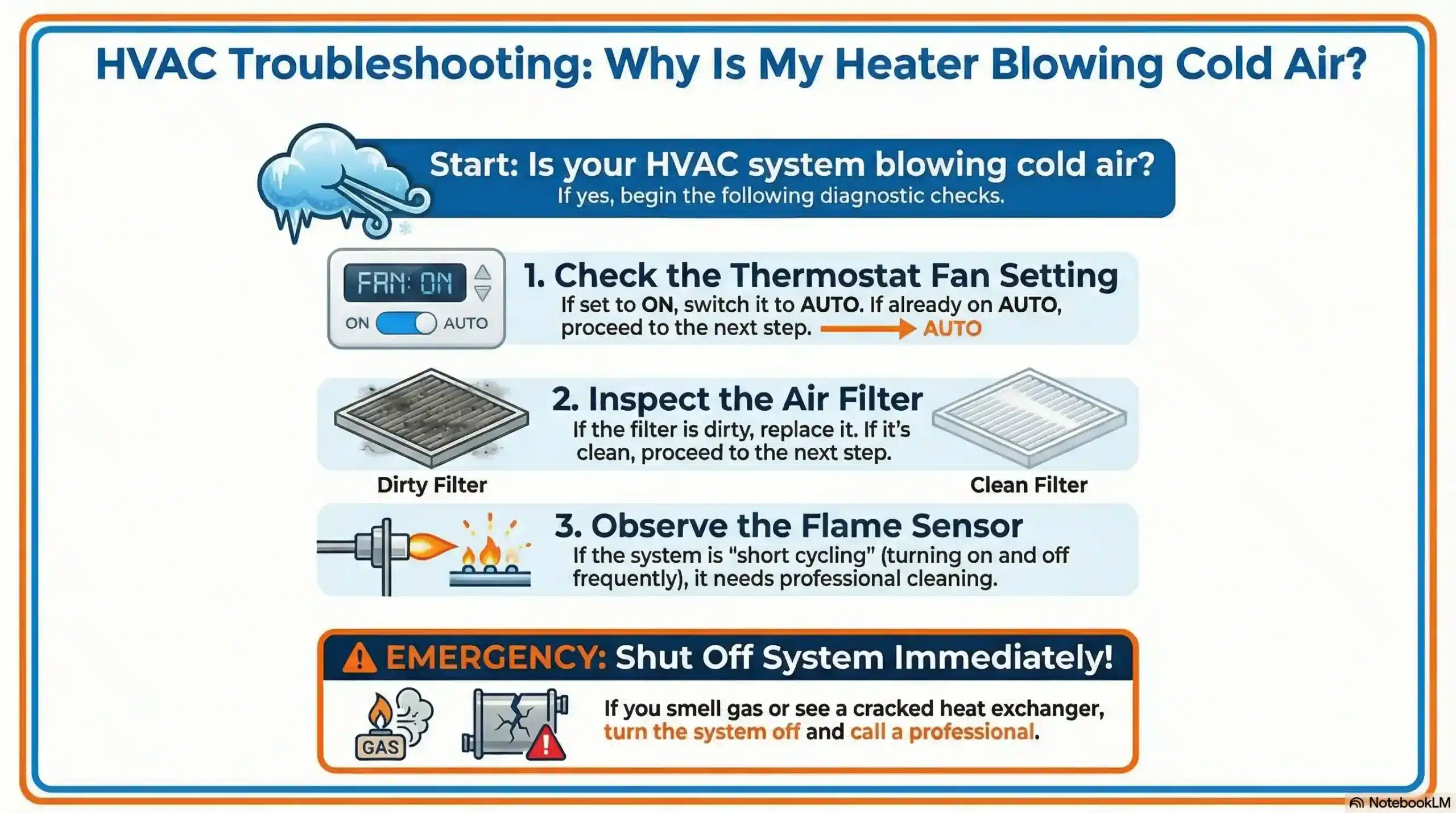
- Check Your Air Filter: A clogged or dirty air filter can restrict airflow, causing your furnace to blow cold air instead of warm. Replace your air filter regularly to ensure optimal performance.
- Inspect Your Thermostat: Sometimes, the culprit behind cold air blowing from your vents lies with the thermostat. Ensure it’s set to “heat” mode and the temperature is higher than the current room temperature. If it’s malfunctioning, it may send incorrect signals to your HVAC system.
- Examine Your Heat Exchanger: A cracked or malfunctioning heat exchanger can disrupt the heating process, resulting in cold air instead of warmth. This issue requires immediate attention from a professional HVAC technician to prevent further damage and ensure safety.
- Check for Airflow Obstructions: Blocked vents, ductwork issues, or a malfunctioning blower fan can impede airflow, causing your furnace to blow cold air. Inspect your vents and ducts for obstructions and ensure they’re open and unobstructed.
- Inspect Your Furnace Burners: Dirty or malfunctioning furnace burners can hinder the heating process, leading to cold air blowing from your vents. Regular maintenance and cleaning can prevent this issue and ensure efficient furnace operation.
To expand the article while maintaining the Top-Notch Plumbing, Heating & Air brand voice and 2025 SEO standards, here are two high-value sections you can insert.
The first focuses on a common user error (the “On” vs. “Auto” setting), and the second addresses a more technical component (the Flame Sensor) to build your authority as experts.
The “On” vs. “Auto” Trap: Is Your Fan Working Against You?
One of the most common reasons homeowners experience cold drafts isn’t a broken furnace—it’s a simple thermostat setting. If your thermostat fan is set to “ON,” the blower motor runs continuously 24/7, even when the furnace isn’t actually heating the air. This means that between heating cycles, your vents will circulate room-temperature air, which feels chilly against your skin.
The Top-Notch Tip: Switch your fan setting to “AUTO.” This ensures the blower only activates when the burners are hot and ready to move warm air. Not only does this eliminate cold drafts, but it also reduces wear on your blower motor and lowers your monthly energy bill.
The Silent Culprit: A Dirty Flame Sensor
If your furnace kicks on, blows warm air for a few seconds, and then abruptly switches to blowing cold air, you likely have a dirty flame sensor. This small, thin metallic rod acts as a safety guard; its job is to detect a flame when the gas valve opens. If the sensor is covered in carbon buildup (soot), it won’t “see” the flame and will shut down the burners to prevent unburned gas from leaking into your home.
Why it happens:
-
Dust Accumulation: Even in clean homes, microscopic dust passes through filters and bakes onto the sensor.
-
Short Cycling: If your system turns on and off too frequently, it accelerates soot buildup.
While some homeowners attempt to clean this themselves with a light abrasive, it is a delicate component. Our technicians include flame sensor cleaning in every Top-Notch Multi-Point Inspection to ensure your system doesn’t leave you in the cold mid-cycle.
Resources and Citations
-
Lennox: How to Fix a Furnace Blowing Cold Air A comprehensive technical guide from a leading HVAC manufacturer that details specific causes like pilot light failure, flame sensor grime, and circuit board malfunctions.
-
The Spruce: How an HVAC Pro Keeps Their Own Home Warm All Winter. Insights from national HVAC technical trainers on maintaining optimal humidity, sealing air leaks, and the importance of MERV-rated air filters for winter efficiency.
-
Trane: Troubleshooting Gas Furnaces – Not Blowing Hot Air. A reliable resource for understanding safety features like the high-limit switch and how repeated overheating can lead to a total system shutdown.
Possible Reasons to Call Us:
If troubleshooting these common issues doesn’t resolve the problem, it’s time to call in the experts at Top-Notch Plumbing, Heating & Air. Our experienced HVAC technicians specialize in air conditioning repair and can diagnose the root cause of your heater blowing cold air, implementing effective solutions to restore comfort to your home.
Don’t let the winter chill invade your home. Trust the experts at Top-Notch Plumbing, Heating & Air to keep your furnace running smoothly and your family warm and cozy all season long. Schedule a service call today!
FAQs
-
If your furnace blows cold air, check your thermostat’s Fan setting. If it is set to “ON” instead of “AUTO,” the blower runs constantly, circulating unheated air between heating cycles.