
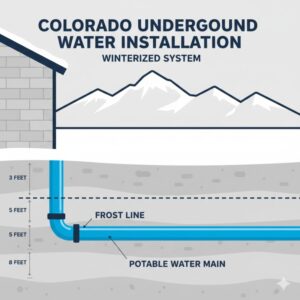
To prevent burst pipes in Colorado, underground water lines must be buried at least 12 inches below the local frost line, typically requiring depths of 42 inches in Boulder to 4.5+ feet in Denver. Proper burial depth is the only way to protect your home’s infrastructure from catastrophic freeze damage during extreme Front Range winters.
Worried about your water line? [Book a Professional Depth Inspection Today]
Why Underground Water Line Depth Matters in Colorado
Colorado’s unique geographical and climatic challenges make proper underground water line depth absolutely critical for system reliability. Unlike states with consistent weather patterns, Colorado experiences extreme temperature variations that can cause improperly buried water lines to freeze, burst, and create extensive property damage.
The Science Behind Frost Penetration
Frost penetration occurs when freezing temperatures reach deep enough into the soil to affect buried utilities. In Colorado, this depth varies significantly based on elevation, soil composition, and local microclimates. When water lines are buried above the maximum frost penetration depth, the water inside can freeze and expand, creating enough pressure to burst even the most durable pipes.
Regional Variations Across Colorado
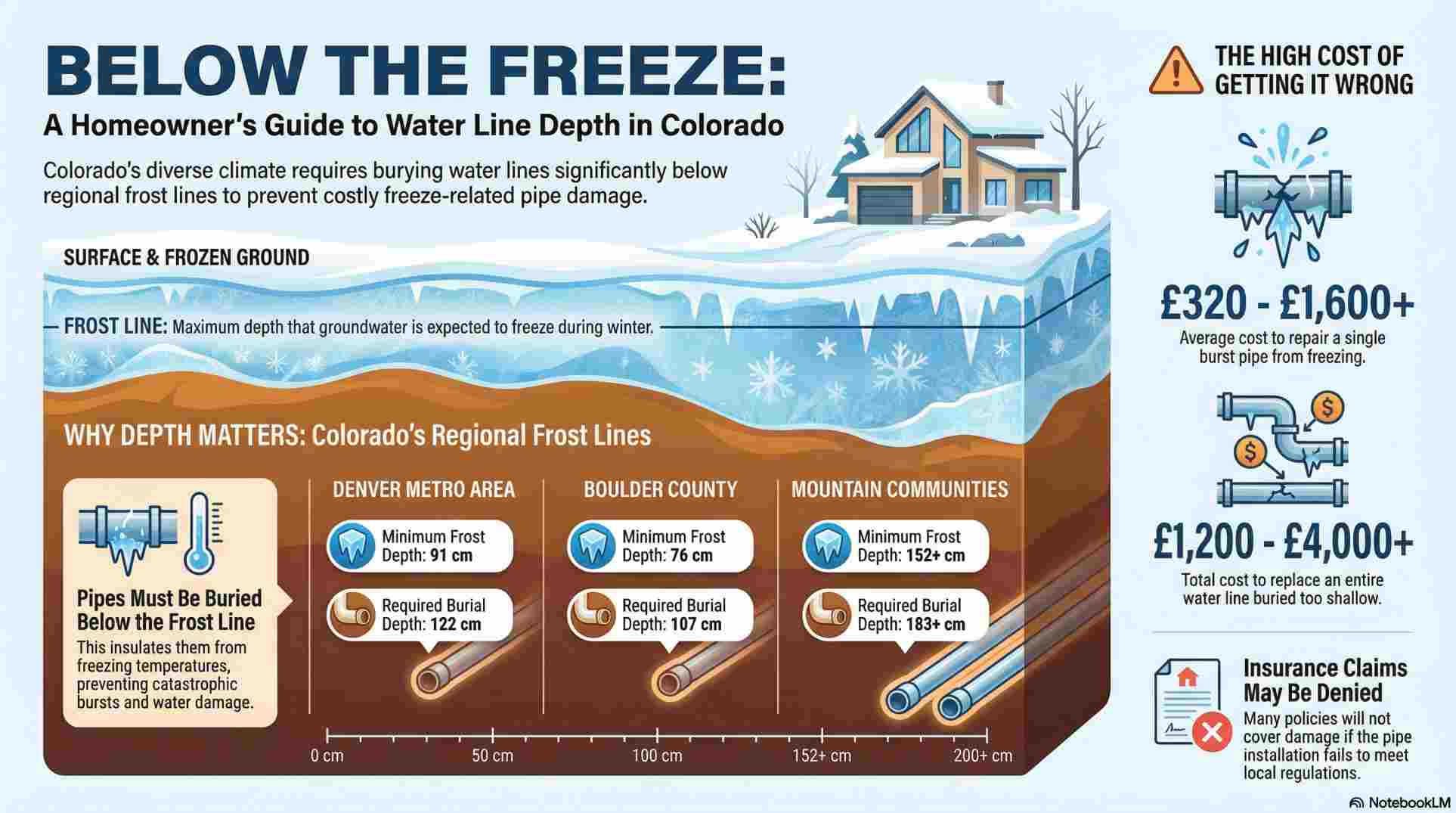
Denver Metro Area: Frost typically penetrates 36 inches below ground surface, requiring an underground water line depth of at least 48 inches to meet International Plumbing Code standards.
Boulder County: With an established frost depth of 30 inches, the proper underground water line depth must reach a minimum of 42 inches below grade.
Colorado Springs: Frost penetration averages 30 inches, necessitating an underground water line depth of 42+ inches for adequate protection.
Northern Colorado Communities: Areas like Greeley, Fort Collins, and Loveland experience frost depths of 36-48 inches, requiring an underground water line depth of 48-60 inches, depending on the specific location.
Mountain Communities: High-altitude locations may see frost penetration exceeding 60 inches, demanding an underground water line depth of 72+ inches in extreme cases.
Colorado Building Code Requirements for Underground Water Line Depth
Colorado municipalities generally adopt the International Plumbing Code (IPC) as their foundation, with local modifications reflecting regional climate conditions and geological challenges.
Statewide Standards
The Colorado Plumbing Code, based on IPC Section 305.4, establishes that exterior water supply piping must be installed:
- Minimum 12 inches below established grade
- Minimum 6 inches below the local frost line
- With adequate protection against freezing temperatures
Municipality-Specific Underground Water Line Depth Requirements
Denver Water Department Service Areas: Denver Water requires an underground water line depth of 4.5 feet minimum, with a maximum depth limitation of 6 feet below grade. Property owners must relocate lines if grade changes affect the required burial depth.
Northern Colorado Communities:
- Greeley: Follows IPC standards requiring 12+ inches below the local frost line
- Fort Collins: Mandates professional soil assessment for installations exceeding 5 feet
- Loveland: Requires enhanced insulation considerations in high-exposure areas
Mountain Water Districts: Some high-altitude districts, including East Dillon Water District, require underground water line depth up to 9 feet due to extreme frost penetration and challenging soil conditions.
2025 Code Considerations
Current building standards emphasize climate-adaptive design, recognizing that traditional underground water line depth requirements may need adjustment as weather patterns evolve. Professional assessment remains crucial for determining appropriate depth in challenging locations.
Factors Influencing Proper Underground Water Line Depth
Soil Composition and Geological Conditions
Colorado’s diverse geology significantly impacts both frost penetration and installation requirements for achieving proper underground water line depth.
Clay Soils (Eastern Colorado Plains): Clay retains moisture and conducts cold more effectively, often requiring an underground water line depth of 6-12 inches beyond minimum code requirements. The soil’s expansion and contraction characteristics also demand enhanced bedding and backfill procedures.
Sandy Soils (South Metro Denver): Well-draining sandy soils may allow shallower installations in some cases, but their rapid temperature conduction can create unexpected freeze risks. Professional assessment helps determine the optimal underground water line depth for these conditions.
Rocky Mountain Soils: Variable composition and challenging excavation conditions in mountain areas often necessitate alternative routing or specialized installation techniques. Underground water line depth decisions require careful geological evaluation in these locations.
Elevation and Microclimate Effects
Front Range Communities: Elevation changes of just a few hundred feet can significantly impact frost depth requirements. Underground water line depth must account for these variations, even within the same municipality.
Mountain Installations: High-altitude locations face extended freeze periods and deeper frost penetration. Proper underground water line depth often requires depths exceeding 6 feet, presenting significant installation challenges.
Valley vs. Hillside Locations: Cold air settlement in valleys can create deeper frost penetration than surrounding areas, affecting optimal underground water line depth decisions.
The True Cost of Inadequate Underground Water Line Depth
Financial Impact of Freeze Failures
Current market data shows that improper underground water line depth decisions can result in substantial financial consequences:
- Average repair cost: $400-2,000 per incident
- Emergency service rates: $120-300+ per hour
- Extensive damage: Up to $5,000+ for complex repairs
Water Line Replacement:
- Professional installation: $50-150 per linear foot
- High-complexity installations: Up to $250 per linear foot
- Total project costs: $647-2,828 average range
Code Compliance Costs
Building Violations: Colorado municipalities impose fines up to $1,000 per offense for code violations. Re-inspection fees and permit violations add additional costs.
Insurance Implications: Improperly installed water lines may void homeowner insurance coverage, leaving property owners fully liable for damage costs.
Long-term Property Value Impact
Properties with documented freeze damage or code violations may face challenges during sale, with buyers and lenders requiring extensive documentation of proper repairs and compliance.
Professional Installation: Ensuring Proper Underground Water Line Depth
When Professional Installation is Essential
Mandatory Professional Requirements:
- Any underground water line depth exceeding 5 feet
- Rocky or challenging soil conditions
- Areas within proximity of existing utilities
- Connections to municipal water systems
- Mountain installations above 8,000 feet in elevation
Professional Expertise Advantages
Licensed plumbing professionals bring critical knowledge for determining optimal underground water line depth:
Local Code Expertise: Understanding of municipality-specific requirements and inspection protocols
Soil Assessment Skills: Ability to evaluate geological conditions affecting installation depth and methods
Proper Equipment Access: Specialized excavation and installation tools for achieving the required underground water line depth
Warranty Protection: Professional installations typically include labor warranties and insurance coverage
Regional Guidelines for Underground Water Line Depth
Front Range Urban Corridor
Recommended Underground Water Line Depth: 48-60 inches, depending on the specific municipality.
Special Considerations: Coordination with multiple utilities and variable soil conditions.
Professional Requirements: Licensed installation for all municipal connections
Northern Colorado Plains
Recommended Underground Water Line Depth: 48-54 inches.
Special Considerations: Clay soil conditions may require enhanced protection.
Professional Requirements: Soil composition analysis for optimal depth determination
Mountain Communities
Recommended Underground Water Line Depth: 60-84 inches, depending on elevation.
Special Considerations: Extended freeze periods and challenging excavation conditions.
Professional Requirements: Geological assessment and specialized installation techniques
Western Slope Regions
Recommended Underground Water Line Depth: 48-66 inches based on elevation and exposure.
Special Considerations: Variable drainage patterns and seasonal access limitations.ns
Professional Requirements: Climate-adaptive installation methods
Warning Signs of Inadequate Underground Water Line Depth
Immediate Indicators
Seasonal Flow Issues:
- Reduced water pressure during cold periods
- Unusual sounds from plumbing fixtures
- Intermittent service during freezing weather
Temperature-Related Problems:
- Any service interruption during the winter months
- Pipes requiring warming to restore flow
- Unusual utility bill increases suggest hidden leaks
Assessment and Inspection
Professional Evaluation: If you experience any freeze-related water issues, a professional assessment can determine whether the underground water line depth meets current standards and local conditions.
Preventive Inspection: Annual professional inspection helps identify potential underground water line depth issues before they become costly failures.
Advanced Protection Strategies
Alternative Protection Methods
When geological conditions prevent achieving optimal underground water line depth through standard burial, Colorado building codes allow alternative protection methods:
Insulation Systems: Properly installed insulation can provide protection when the standard underground water line depth isn’t achievable. Professional design ensures adequate thermal protection.
Heat Trace Applications: Self-regulating heating cables offer protection for challenging installations. These systems require professional installation and backup power considerations.
Modern Monitoring Technology
Temperature Monitoring: Advanced systems provide real-time monitoring of soil and pipe temperatures, offering early warning of potential freeze conditions.
Smart Shutoff Systems: Automated protection systems can prevent catastrophic damage if the underground water line depth proves inadequate during extreme weather events.
Maintenance and Long-term Protection
Annual Inspection Protocol
Visual Assessment: Regular inspection of exposed portions and connections helps identify potential issues before they affect buried portions.
Professional Evaluation: An Annual professional assessment can identify settling, grade changes, or other factors that might compromise the underground water line depth.
Seasonal Preparation
Winter Readiness: Proper system preparation helps maximize protection regardless of underground water line depth.
Spring Assessment: Post-winter evaluation ensures that freeze-thaw cycles haven’t affected system integrity.
2025 Technology and Future Considerations
Smart Infrastructure
Modern water line protection increasingly incorporates intelligent monitoring systems that complement proper underground water line depth with real-time assessment and protection.
Predictive Monitoring: Advanced sensors can predict freeze risk based on soil conditions and weather patterns, providing early warning regardless of underground water line depth.
Remote Management: Smart systems allow homeowners to monitor and protect their water systems even when the underground water line depth approaches the minimum requirements.
Climate Adaptation
Evolving weather patterns may require reassessment of traditional underground water line depth standards. Professional consultation helps ensure installations remain adequate for future conditions.
Working with Top-Notch Plumbing: Northern Colorado’s Underground Water Line Depth Experts
When it comes to ensuring proper underground water line depth in Northern Colorado’s challenging climate, Top-Notch Plumbing, Heating & Air brings unmatched expertise to every installation. Founded by Adrian Vigil with a grassroots commitment to “helping people,” our team understands that proper underground water line depth isn’t just about meeting code—it’s about protecting your family and property investment.
Local Expertise You Can Trust
Deep Regional Knowledge: Our team’s extensive experience in Greeley, Evans, Fort Collins, and Loveland means we understand the specific underground water line depth requirements for each community’s unique soil conditions and frost patterns.
Code Compliance Excellence: As Northern Colorado’s trusted plumbing experts, we ensure every underground water line depth installation meets or exceeds local building codes and IPC standards.
Professional Recognition: Five-time “Best of Greeley” winner (2020-2024) with Five Star ratings, demonstrating our commitment to quality underground water line depth installations.
Comprehensive Underground Water Line Depth Services
Professional Assessment: Our licensed master plumbers evaluate soil conditions, frost line data, and local code requirements to determine optimal underground water line depth for your specific property.
Expert Installation: Using specialized equipment and proven techniques, we ensure proper underground water line depth while minimizing disruption to your property.
Quality Guarantee: Every installation includes our 1-year labor warranty, providing confidence in your underground water line depth investment.
Emergency Response: When inadequate underground water line depth leads to freeze failures, our team responds quickly to minimize damage and restore service.
Why Choose Professional Installation
Safety and Compliance: Proper underground water line depth requires specialized knowledge and equipment. Our licensed professionals ensure safe, code-compliant installations.
Long-term Protection: Professional assessment and installation protect your investment by ensuring adequate underground water line depth for Colorado’s challenging conditions.
Peace of Mind: With Top-Notch Plumbing, you can trust that your underground water line depth meets the highest standards for Northern Colorado’s climate.
Additional Resources and Citations
For readers seeking to verify local requirements and stay current with Colorado’s underground water line depth regulations, these authoritative sources provide essential information:
1. Colorado State Plumbing Board – Official Code and Permit Information
The Colorado Division of Professions and Occupations maintains the state’s official plumbing code standards and permit requirements. This resource provides current information on the Colorado Plumbing Code, which incorporates International Plumbing Code (IPC) standards with state-specific modifications. Homeowners can access permit application forms, inspection requirements, and find licensed contractors through this official state portal.
2. International Code Council – International Plumbing Code Standards
The International Code Council publishes the International Plumbing Code (IPC) that serves as the foundation for Colorado’s plumbing regulations. Their digital code library provides access to current IPC standards, including Section 305.4 regarding freeze protection requirements and exterior water supply system installation depths. This resource is essential for understanding the technical standards that govern underground water line depth requirements nationwide.
3. U.S. Department of Commerce – National Frost Depth Data
The National Weather Service provides official frost depth mapping and historical data used by building codes across the United States. Colorado’s varying elevation and climate create significant regional differences in frost penetration, making this federal resource crucial for determining appropriate underground water line depth in specific locations. Local building departments reference this data when establishing minimum burial depth requirements for water lines.
Conclusion: Protecting Your Investment Through Proper Underground Water Line Depth
Determining the correct underground water line depth for your Colorado property requires understanding local frost patterns, soil conditions, building codes, and installation best practices. While minimum code requirements provide basic protection, investing in professional assessment and installation that exceeds these minimums offers long-term security against Colorado’s harsh winter conditions.
The difference between adequate and exceptional underground water line depth can mean the difference between decades of reliable service and costly winter emergencies. Whether you’re in the mountains where frost depths exceed 5 feet or in the Front Range where rocky soils complicate installation, working with experienced local professionals ensures your underground water line depth meets both current codes and future protection needs.
For Northern Colorado homeowners, proper underground water line depth represents more than regulatory compliance—it’s an investment in peace of mind. Contact Top-Notch Plumbing, Heating & Air today to ensure your water line installation meets the highest standards for underground water line depth in our region’s challenging climate.
Remember: Proper underground water line depth protects more than just your water supply—it protects your home, your family, and your financial investment in one of life’s most essential utilities.
FAQs
-
In Colorado, water lines must typically be buried 4.5 to 5 feet deep. Standard code requires pipes to sit at least 12 inches below the local frost line to prevent freezing.


