Gas vs. Electric Water Heaters: 2026 Pros, Cons & Costs
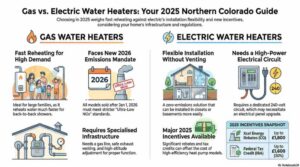
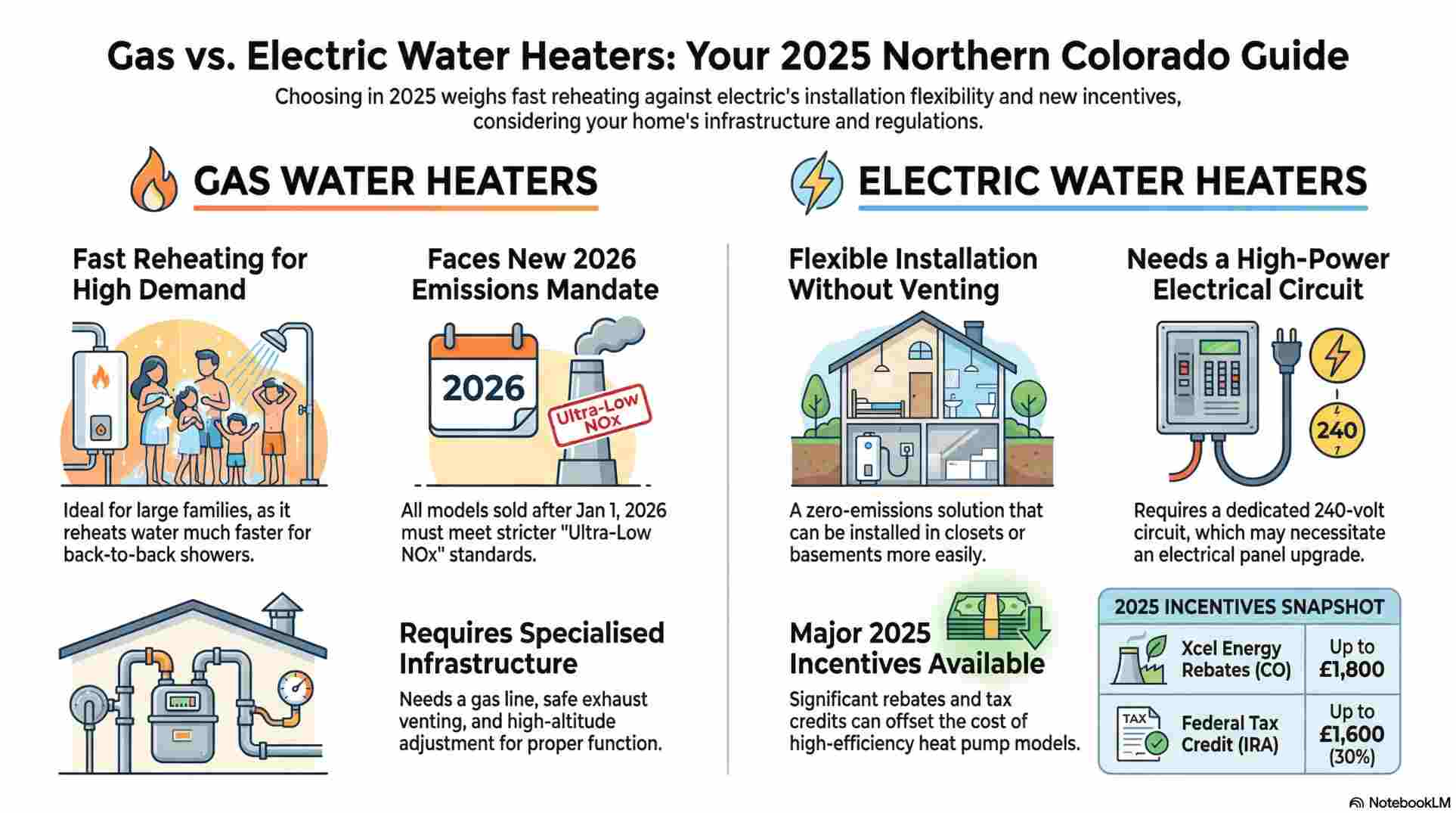
Choosing between gas vs. electric water heaters in 2026 comes down to two factors: your home’s existing infrastructure and your eligibility for the $2,000 federal tax credit expiring this year. While gas units offer faster recovery times for large Greeley households, high-efficiency heat pump electric models now offer superior long-term savings and significant upfront rebates.
[Get a Professional Water Heater Assessment & Quote]
Understanding Water Heater Technologies in 2025
Gas Water Heater Operation
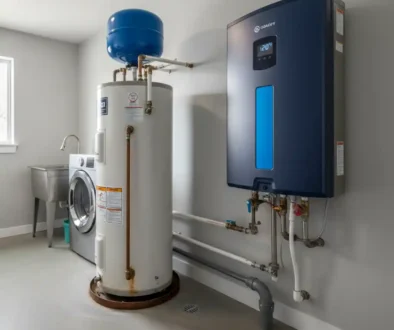
Gas water heaters burn natural gas or propane to heat water stored in an insulated tank. A burner assembly at the tank’s base ignites gas, heating water through a heat exchanger system. Combustion gases exit through a dedicated venting system.
Key Components:
- Gas burner assembly with safety controls
- Heat exchanger and flue system
- Thermostat and temperature controls
- Safety features, including a pilot light or electronic ignition
- Venting system for combustion gas removal
Electric Water Heater Operation
Electric water heaters use electric resistance elements or heat pump technology to warm water. Standard electric water heater units employ heating elements submerged in the water tank, while heat pump models extract energy from ambient air.
System Types:
- Electric resistance: Direct heating elements
- Heat pump: Air-source technology transferring ambient heat
- Hybrid models: Combining resistance and heat pump operation
- Standard electrical connections and controls
- No venting requirements
Critical 2025 Update: New DOE Efficiency Standards
The Department of Energy finalized new efficiency standards in May 2024, taking effect May 6, 2029. These regulations fundamentally reshape gas vs electric water heater options:
Standards Impact:
- Electric water heater units must achieve significantly higher efficiency ratings
- Heat pump technology becomes dominant for electric systems (50%+ of new units)
- Gas water heater storage units see modest efficiency increases
- Tankless systems maintain efficiency advantages
- Manufacturers must comply with new performance requirements
These standards are designed to reduce consumer energy consumption while accelerating heat pump adoption across the industry.
Gas Water Heaters: Comprehensive Analysis
Advantages of Gas Water Heater Systems
Fast Recovery Performance
Gas water heater units heat water 2-3 times faster than standard electric models. A 50-gallon gas water heater typically recovers in 30-40 minutes versus 60-90 minutes for electric resistance units.
Practical benefit: Ideal for large families or homes with multiple bathrooms experiencing peak hot water demand during morning routines.
Operating Cost Considerations
Natural gas pricing varies by region and utility provider. In many Colorado markets, natural gas has historically cost less per BTU than electricity, though this relationship fluctuates with commodity prices and rate structures.
Important: Operating costs depend on local utility rates, usage patterns, system efficiency, and seasonal variations. Professional evaluation is recommended.
Power Independence
Gas water heaters with pilot lights continue operating during electrical outages—valuable during Colorado’s winter storms and utility disruptions.
High-Capacity Options
Gas water heater systems efficiently handle larger volumes, making them suitable for commercial applications or large residential properties.
Gas Water Heater Disadvantages
Installation Complexity
Converting from an electric to a gas water heater requires extensive professional work:
- Gas line installation by a licensed contractor
- Proper venting system installation
- Local permits and safety inspections
- Professional installation by a licensed plumber
- Coordination across multiple trades
Safety Considerations
Gas water heater systems present risks requiring vigilant maintenance:
- Carbon monoxide exposure potential
- Gas leak risks
- Proper ventilation requirements
- Regular safety inspections
Regulatory Pressure
Building codes increasingly favor efficient electric water heater systems, particularly in new construction applications.
Electric Water Heaters: Detailed Evaluation
Electric Water Heater System Advantages
Superior Energy Efficiency
Electric water heater resistance units achieve 90-95% efficiency since nearly all input energy converts to heat. Heat pump models reach 200-300% efficiency through advanced technology.
Simplified Installation
Electric water heater installations require:
- No gas lines or venting systems
- Standard electrical connections
- Fewer safety inspections
- Reduced installation complexity
Enhanced Safety Profile
Electric water heater models eliminate risks associated with:
- Gas leaks
- Carbon monoxide production
- Combustion hazards
- Ventilation requirements
Environmental Potential
As Colorado’s electricity grid incorporates more renewable sources, electric water heater units can achieve increasingly lower emissions.
Extended Lifespan
Electric water heater systems typically last 10-15 years versus 8-12 years for gas models, though actual lifespan varies based on maintenance, water quality, and usage patterns.
Electric Water Heater Disadvantages
Slower Recovery Times
Electric water heater resistance heating takes significantly longer to reheat depleted tanks, potentially causing inconvenience during high-demand periods.
Operating Cost Variables
Electricity and natural gas pricing vary significantly by utility provider, rate structure, and market conditions. Operating costs depend on multiple factors requiring individual assessment.
Power Dependency
Electric water heater models provide no hot water during power outages unless backup power is available.
Electrical Capacity Requirements
Some homes may need electrical panel upgrades to accommodate electric water heater installation. A professional electrical assessment determines if the current service capacity is adequate.
2025 Investment Considerations for Northern Colorado
Total Project Costs
Gas vs electric water heater projects involve multiple components varying significantly based on existing home infrastructure:
Gas Water Heater Projects:
- Unit costs vary by efficiency rating and features
- Installation requires an existing gas service or a new gas line installation
- A proper venting system is mandatory for safety compliance
- Professional installation ensures code compliance
Electric Water Heater Projects:
- Heat pump models typically cost more than standard resistance units
- Electrical panel capacity may require professional evaluation
- Installation is generally simpler with adequate electrical service
- Energy efficiency varies dramatically between technology types
Regional Utility Considerations
Northern Colorado homeowners should evaluate:
- Natural gas and electricity rate fluctuations
- Xcel Energy’s proposed rate changes potentially impact electric costs through 2029
- Time-of-use rates and seasonal variations
- Individual household usage pattern variations
Professional assessment recommended for specific cost projections based on your home’s infrastructure and utility rate structure.
Heat Pump Technology: Advancing Electric Water Heater Systems
Heat pump water heaters represent a significant advancement in electric water heater technology:
Heat Pump Operation
Efficiency Technology
- Traditional electric water heater resistance: ~95% efficiency
- Heat pump electric water heater: 200-300% efficiency capability
- Performance varies based on installation conditions and climate
Climate Performance in Colorado
- Heat pump water heaters extract energy from ambient air temperature
- Performance varies with seasonal temperature changes
- Northern Colorado climate requires professional evaluation for optimal performance
- Basement installations typically provide consistent year-round operation
Environmental Considerations
- Reduced electricity consumption compared to the standard electric water heater resistance
- Compatible with renewable energy systems, including solar
- No direct combustion emissions
Heat Pump Installation Requirements
Professional installation is essential due to:
- Adequate clearance requirements for air circulation
- Proper drainage for condensate management
- Electrical capacity evaluation
- Integration with existing plumbing systems
Regional Considerations for Northern Colorado
Climate Factors
- Heat pump water heater performance is effective down to 40°F ambient temperature
- Basement installations maintain consistent performance year-round
- Xcel Energy is facing significant rate increases, with electricity rates potentially rising 55-72% by 2029
Available Incentives and Programs
Colorado homeowners can access:
- Federal tax credits up to $2,000 for heat pump water heaters (expires December 31, 2025)
- Xcel Energy rebates for qualifying electric water heater models (amounts vary by program)
- Local utility efficiency programs in Fort Collins and Loveland
Critical deadline: Federal tax credits expire December 31, 2025 – installation must be completed by this date to qualify.
Building Code Evolution
Northern Colorado municipalities increasingly update building codes, encouraging efficient water heating systems. Several local jurisdictions implement requirements for:
- High-efficiency systems in new construction
- Enhanced insulation standards for water heating equipment
- Integration requirements for renewable energy systems
Homeowners should verify current local building code requirements with their municipality before system selection.
Professional Installation Requirements
Same-Type Replacements
Gas to Gas Water Heater: Professional installation required when existing gas line and venting systems accommodate new unit specifications. Electric to Electric Water Heater: Professional installation required when the existing electrical capacity meets the new unit requirements
Fuel Type Conversions
Gas to Electric Water Heater Conversion
Professional conversion involves complex steps:
- Electrical Assessment: A Licensed electrician evaluates the electrical panel capacity
- Gas Line Decommissioning: Licensed gas technician required for safe disconnection
- Ventilation Removal: Professional sealing of former gas vents
- Electrical Installation: New 240V circuit installation by a licensed electrician
- Permits and Inspections: Local permitting and inspection requirements
Electric to Gas Water Heater Conversion
Professional conversion requires extensive work:
- Gas Line Installation: Licensed gas contractor for piping installation
- Venting System: Professional exhaust venting installation to the exterior
- Combustion Air Supply: Adequate air supply system for safe operation
- Safety Inspections: Multiple professional inspections throughout the process
Essential: All gas vs electric water heater conversions require professional consultation to evaluate feasibility, infrastructure requirements, and total project scope.
Decision Framework for Northern Colorado Homeowners
When Gas Water Heater Systems May Be Appropriate:
- Natural gas service is already available to your home
- Fast recovery time is important for household needs
- Backup operation during power outages is valuable
- Replacing the existing gas water heater system with an adequate infrastructure
- Professional assessment confirms suitability
When Electric Water Heater Systems May Be Appropriate:
- Environmental considerations are important to households
- Safety and simplicity are priorities
- Home has adequate electrical service capacity
- Interest in advanced heat pump water heater technology
- Replacing the existing electric water heater system
- Professional assessment confirms cost-effectiveness
Professional Assessment Required
Top-Notch Plumbing recommends a professional evaluation considering:
- Your home’s existing infrastructure capabilities
- Local utility rate structures and projections
- Household hot water usage patterns
- Available incentive programs
- Long-term operating characteristics
External Resources & Citations
Key Industry Resources Referenced
1. U.S. Department of Energy – Water Heater Efficiency Standards
Official resource for residential water heater standards, efficiency requirements, and regulatory updates. Foundation for 2029 efficiency standards discussion.
2. National Renewable Energy Laboratory – Advanced Water Heating Technology Analysis
Comprehensive study comparing residential water heating technologies across climate zones. Supports heat pump efficiency analysis and energy consumption comparisons.
3. ENERGY STAR Federal Tax Credits for Water Heaters
Official documentation of federal tax incentives for efficient water heating systems. Current information on 30% tax credit (up to $2,000) with a December 31, 2025, deadline.
Making Your 2025 Water Heater Decision
Choosing between gas vs electric water heaters requires balancing immediate costs, long-term operating expenses, environmental impact, and future regulatory trends. For Northern Colorado homeowners, a professional evaluation ensures optimal system selection based on individual circumstances.
Key Considerations:
- Heat pump electric water heater models advancing efficiency capabilities
- Gas water heater systems offer fast recovery rates, but face regulatory pressure
- Professional installation is crucial for safety and performance
- Local incentives can significantly impact project economics
- Future regulations increasingly favor electric water heater systems
Recommended Next Steps:
- Assess current system age and condition
- Evaluate household hot water usage patterns
- Review available incentives from utilities and government programs
- Consult with professionals for proper sizing and installation requirements
- Consider long-term trends in utility costs and regulations
Expert Installation from Top-Notch Plumbing, Heating & Air
As Northern Colorado’s premier water heater specialists, Top-Notch Plumbing, Heating & Air brings over 60 years of combined experience to every gas vs electric water heater installation. Our licensed master plumbers ensure:
- Expert consultation on optimal system selection for your home
- Professional installation meeting all local codes and safety standards
- Comprehensive warranties on labor and equipment
- Ongoing maintenance to maximize system lifespan and efficiency
Contact Top-Notch Plumbing, Heating & Air:
- Service Area: Greeley, Evans, Fort Collins, Loveland & Northern Colorado
FAQs
-
-
The best choice depends on your existing infrastructure. Gas units offer faster recovery for large families, while electric models are often simpler to install if you lack venting.
-