
Green Plumbing: Sustainable Practices for Eco-Friendly Homes
You can reduce your home’s water usage by up to 60% and significantly slash monthly utility bills simply by adopting green plumbing standards. This guide breaks down the essential eco-friendly fixtures, energy-efficient systems, and sustainable materials that protect the environment while putting money back in your pocket. Whether you are upgrading a single faucet or planning a full eco-renovation, here is how to start your green plumbing journey.
➔ Ready to slash your water bill? Book a Green Plumbing Audit with Top Notch.
What is “Green Plumbing”?
Green plumbing emphasizes water and energy efficiency, as well as the use of sustainable materials. It goes beyond traditional plumbing practices to minimize waste, conserve resources, and protect the environment.
When we discuss green plumbing, we are not just talking about conserving water or reducing energy consumption. It is a comprehensive strategy that considers the entire lifecycle of plumbing systems, from the materials used to the disposal of waste. By adopting green plumbing practices, we can create a more sustainable future for ourselves and the generations to come.
The Importance of Sustainable Plumbing
Sustainable plumbing plays a crucial role in preserving our planet for future generations. Water scarcity, rising energy costs, and environmental degradation are pressing concerns that can be addressed through responsible plumbing practices, as well as by managing your waste management and choosing eco-friendly plumbing fixtures.
Components of Green Plumbing and their Benefits
Green plumbing encompasses various components that contribute to its sustainability goals. Let’s explore some of these key components:
Water-Efficient Fixtures
Water scarcity is a global issue affecting millions of people, including in North America. Installing water-efficient fixtures is a crucial step in green plumbing. These fixtures include low-flow toilets, aerated faucets, and water-saving showerheads. By reducing water consumption, homeowners can significantly decrease their overall environmental impact.
Low-flow toilets, for example, use advanced flushing mechanisms that require less water per flush compared to traditional toilets; this not only conserves water but also reduces the strain on wastewater treatment plants. Aerated faucets mix air with water, maintaining a steady flow while reducing water usage. Water-saving shower heads are designed to limit the flow rate without compromising the shower experience, resulting in substantial water savings.
By reducing water consumption and energy usage, green plumbing significantly minimizes the individual’s ecological footprint. Conserving resources, reducing greenhouse gas emissions, and preventing water pollution contribute to a healthier planet.
Energy-Efficient Systems
Energy-efficient systems are another vital component of green plumbing. These systems encompass efficient water heaters, smart irrigation controllers, and properly insulated pipes. By optimizing energy usage, homeowners can reduce their carbon footprint and save money on utility bills. Who doesn’t love saving money?
Efficient water heaters are designed to minimize heat loss and provide hot water on demand, eliminating the need for excessive energy usage. Smart irrigation controllers use weather data and soil moisture sensors to adjust watering schedules, ensuring that plants receive the right amount of water without wastage.
Properly insulated pipes prevent heat loss during water transportation, reducing the need for additional energy to maintain hot water temperatures. By adopting these energy-efficient systems, homeowners can contribute to a greener future while enjoying the benefits of lower energy bills.
Sustainable Materials in Plumbing
We’ve all heard the adage, “Reduce. Reuse. Recycle.”, but did you know that it can be adapted for use in plumbing as well? Choosing sustainable materials for plumbing installations is an important aspect of green plumbing. Opting for materials like bamboo, which is a rapidly renewable resource, or recycled metals for pipes and fittings ensures that resources are not unnecessarily depleted.
Bamboo, known for its rapid growth and strength, is an excellent alternative to traditional wood materials. It can be used for various plumbing applications, including flooring, cabinets, and even pipes. By using bamboo, homeowners can reduce their reliance on slow-growing hardwood trees, promoting sustainable forestry practices.
Recycled metals, such as copper or stainless steel, are also popular choices for plumbing pipes and fittings. These materials are durable, corrosion-resistant, and can be recycled multiple times without losing their properties. By utilizing recycled metals, homeowners can minimize the demand for raw materials and reduce the environmental impact associated with mining and manufacturing processes.
By choosing to reduce, reuse, and recycle when it comes to our plumbing systems, homeowners can contribute to the circular economy and support the conservation of natural resources.
Environmental Impact of Sustainable Plumbing
One of the key ways green plumbing helps the environment is through water conservation. Traditional plumbing systems often waste significant amounts of water due to leaks, inefficient fixtures, and excessive use. Green plumbing techniques, such as installing low-flow toilets and faucets, can reduce water consumption by up to 50%. This not only saves water but also reduces the strain on local water sources, especially in areas experiencing drought or water scarcity.
Sustainable plumbing practices help prevent water pollution. Green plumbing systems often include measures to capture and treat wastewater, preventing harmful contaminants from being released into the environment. This is particularly important in urban areas where untreated sewage can contaminate rivers, lakes, and groundwater sources.
Cost Savings from Green Plumbing
Adopting green plumbing techniques can also result in substantial cost savings. By reducing water and energy consumption, homeowners can lower their utility bills over the long term. Additionally, some jurisdictions offer incentives and rebates for eco-friendly plumbing installations, further enhancing the financial benefits.
One of the main cost-saving benefits of green plumbing is the reduction in water and energy bills. By installing water-efficient fixtures and appliances, homeowners can significantly decrease their monthly water usage. This not only saves money but also helps to conserve a precious resource. Additionally, green plumbing systems often include rainwater harvesting systems (the collection and reuse of rainwater for non-potable purposes such as watering the garden or flushing toilets) and energy-efficient features, like low-flow showerheads, solar water heaters, and high-efficiency toilets. This further reduces the reliance on municipal water sources and can lead to even greater cost savings.
Furthermore, many municipalities and utility companies offer incentives and rebates for homeowners who adopt green plumbing practices. These financial incentives can help offset the initial costs of installing eco-friendly plumbing systems, making them even more affordable and appealing.
Implementing Green Plumbing in Your Home
Transitioning to green plumbing in your home is a worthwhile endeavor that can yield significant positive effects. By adopting sustainable practices, you not only contribute to the conservation of natural resources but also reduce your water and energy consumption, leading to cost savings in the long run. Here are steps to help you embrace sustainability:

Steps to Transition to Green Plumbing
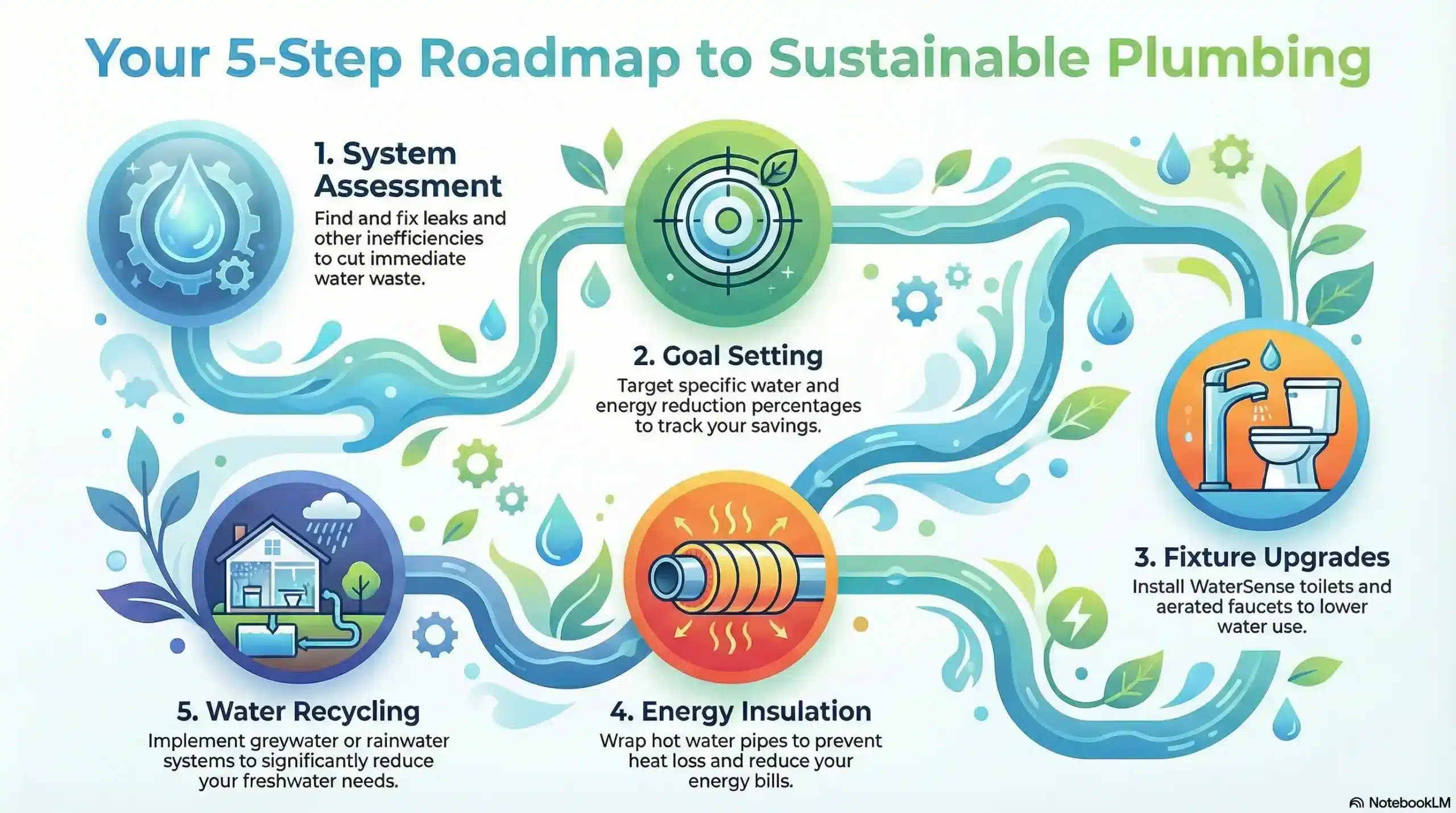
1. Assess your current plumbing system: Take a thorough look at your existing plumbing system to identify areas where improvements can be made. This could include upgrading fixtures, fixing leaks, or addressing any inefficiencies that may be present by adding insulation. By understanding the current state of your plumbing, you can determine the necessary steps to make it more sustainable.
2. Set goals: Determine your objectives and create a plan to achieve them. Setting realistic targets for water and energy savings will help you stay focused and motivated throughout the transition process. Whether your aim is to reduce water consumption by a certain percentage or lower your energy usage, having clear goals in mind will guide your decision-making.
3. Install water-efficient fixtures: According to the EPA, you can reduce your water usage by up to 60% by installing water-efficient fixtures. One of the most effective ways to make your plumbing greener is by replacing old toilets, faucets, and showerheads with water-efficient alternatives. Look for fixtures that are labeled with the WaterSense certification, as they have been tested and proven to meet high-efficiency standards. These fixtures can significantly reduce water usage without compromising performance.
4. Insulate pipes: Properly insulating hot water pipes is a simple yet effective way to reduce heat loss and save energy. By insulating the pipes, you can minimize the amount of heat that escapes as the water travels from the water heater to the faucets. This not only helps to conserve energy but also ensures that hot water reaches its destination more quickly, reducing the need to run the tap for extended periods.
5. Recycle and reuse water: A greywater system is a plumbing system that recycles wastewater from sinks, showers, and laundry machines for non-potable purposes, such as irrigation and toilet flushing. This way, you can reuse water that would otherwise go to waste and reduce your water consumption. A greywater system can also save you money on your water bills and reduce the strain on the water supply.
However, you need to consult a professional plumber to install a greywater system, as it requires proper filtration, storage, and distribution.
Finding a Green Plumber
To ensure a successful transition to green plumbing, it may be beneficial to seek assistance from a professional green plumber. They can assess your current plumbing system, recommend appropriate upgrades, and ensure that all installations are done correctly and efficiently. Additionally, green plumbers stay up-to-date with the latest advancements in eco-friendly plumbing technologies, allowing them to offer the most effective solutions for your home.
By collaborating with a green plumber, you can tap into their expertise and experience, making the transition to green plumbing a seamless and rewarding process. They can also help you navigate any local regulations or incentives that may be available for implementing sustainable plumbing practices.
The Role of Green Plumbing in Sustainable Development
As sustainable development gains momentum worldwide, green plumbing will play an increasingly critical role. From eco-friendly residential structures to sustainable urban planning, green plumbing practices will be an essential component of building a sustainable future for all.
Green plumbing practices (eg. drain cleaning) are integral to eco-friendly residential structures. By incorporating water-efficient fixtures, such as low-flow toilets and faucets, homeowners can significantly reduce their water consumption and minimize their environmental impact. Additionally, the use of sustainable materials in plumbing systems, such as recycled pipes or eco-friendly insulation, further enhances the overall sustainability of the building.
In sustainable urban planning, green plumbing plays a vital role in reducing the strain on municipal water resources. By implementing rainwater harvesting systems or utilizing stormwater for irrigation, cities can conserve water and mitigate the impact of urbanization on natural water sources. Furthermore, incorporating green infrastructure, such as green roofs or permeable pavements, can help manage stormwater runoff and improve water quality.
Resources & Citations
-
U.S. Environmental Protection Agency (EPA) – WaterSense Program EPA WaterSense: Statistics and Facts
-
Why it’s essential: This is the primary authority for water efficiency in the U.S. It provides the data supporting how high-efficiency fixtures (like those mentioned in the article) can reduce household water use by 20–30% and save the average family hundreds of dollars annually.
-
-
U.S. Department of Energy (DOE) – Energy Saver Guide: Insulating Hot Water Pipes for Energy Savings
-
Why it’s essential: This resource provides technical validation for the “Energy Retention” point in the article. It confirms that pipe insulation can raise delivered water temperature by 2°F–4°F, allowing homeowners to lower their water heater settings and reduce standby heat loss by up to 45%.
-
-
Sustainable Sources – Green Building Solutions, Water Recycling and Rainwater Harvesting Systems
-
Why it’s essential: This citation provides deeper insights into the “Circular Materials” and “Water Recycling” sections. It offers comprehensive guides on the design and environmental impact of greywater and rainwater systems, which are critical for sustainable urban planning and reducing municipal strain.
-
Key Takeaways
Transitioning to eco-friendly plumbing is more than an environmental choice—it’s a strategic investment in your home’s efficiency and longevity. Here are the most actionable insights for modern homeowners:
-
Slash Utility Costs by Half: Implementing high-efficiency fixtures like low-flow toilets and WaterSense-labeled faucets can reduce household water consumption by up to 50–60%, leading to immediate and long-term savings on utility bills.
-
Maximize Energy Retention: Simple upgrades, such as insulating hot water pipes and installing smart irrigation controllers, prevent heat loss and eliminate water waste, significantly lowering your home’s carbon footprint.
-
Invest in Circular Materials: Choosing renewable resources like bamboo or infinitely recyclable metals for your plumbing infrastructure supports a circular economy and reduces the environmental degradation associated with traditional mining.
-
Leverage Financial Incentives: Many municipalities offer rebates and tax incentives for green plumbing installations, which can help offset the initial costs of upgrading to solar water heaters or rainwater harvesting systems.
-
Implement Water Recycling: Advanced systems, such as greywater recycling and rainwater harvesting, allow you to repurpose wastewater for non-potable needs like irrigation, drastically reducing your reliance on municipal water sources.
-
Partner with Certified Experts: Consulting a professional green plumber ensures that your upgrades meet current regulatory standards and utilize the latest eco-friendly technologies for maximum efficiency.
FAQs
-
Green plumbing uses water-efficient fixtures and sustainable materials to reduce waste. It lowers utility bills, conserves local water resources, and decreases the energy needed to heat and move water.